Abstract
Retained fetal membrane (RFM) is a crucial calving related disorder that affects economic for the farmer and herd health. Retention of Placenta (ROP) is the condition in which the fetal membranes are not expelled within a period of 12 hours after parturition. Buffalo cows (n=34) aged 4-9 years old with 2-6 lactation season were used in the present study. The Experimental buffaloes were divided into either with (n=25) or without (n=9) fetal membrane retention. The objective of this study was to evaluate the effect of oxytetracycline treatment on reproductive performance of buffalo-cows with retained fetal membranes. All buffaloes in treated group received systemic infusion of oxytetracyclin Hcl injection 5% and 10 mg/kg oxytetracycline for 3 days intrauterine. Reproductive performance parameters for all experimental buffaloes were days to first estrous, number of service per conception, days open and pregnancy diagnosis. All reproductive parameters demonstrated significant changes between treated and non-treated animals (P < 0.05). Altogether, the obtained results indicated that retained placenta in buffaloes could be treated successfully by intrauterine infusion of oxytetracycline
Author Contributions
Academic Editor: Tarek Shety, Animal Medicine Dept., Faculty of Veterinary Medicine, Zagazig University, Egypt
Checked for plagiarism: Yes
Review by: Single-blind
Copyright © 2018 Mohamed A Gohar et al
 This is an open-access article distributed under the terms of the Creative Commons Attribution License, which permits unrestricted use, distribution, and reproduction in any medium, provided the original author and source are credited.
Competing interests
The authors have declared that no competing interests exist.
Citation:
Introduction
The incidence of retention of placenta in buffaloes ranged from 10-15%. Furthermore, a wide variations were reported (2.89- 12.23%) and the incidence gradually increases with parity, reached a maximum at the fifth parity (30%) and associated with malnutrition 1, 2.
Following RFM, the uterus becomes contaminated with bacteria which have a negative impact on reproductive performance in cattle including delayed uterine involution, a prolonged interval to first service, an increased number of services per conception,, a decreased conception rate and a prolonged interval of days open 3, 4, 5. Furthermore, RFM have been associated with increased risk for endometritis, metritis, ketosis 6 and mastitis. These diseases can in turn lead to decreased fertility and potential losses in milk production 7.
Many factors were found to affects the postpartum reproductive performances and postpartum fertility in dairy cows including parity numbers, parity season month of parturition parity 8 as well as the sex of new born calves 9. Furthermore, a meta-analysis of different studies showed that RFM is associated with 2 to 3 more days to first service; the conception rate at the first service following RFM is 4% - 10% lower than non-retained animals., Also, an increase of 6-12days than normal days open was recognized 10. Postpartum metritis is common sequelae of RFM, and the rationale behind antibiotics application for RFM to prevent or treat metritis and its negative effects on fertility 7.
The mangemental tying up the animals as per normal husbandry practices in many developing countries restricts the ability of buffalo farmers to observe heat signs 11. Buffalos also tend to show heat signs during the night when farmers are not observing their animals 12
In general it was proven that that retention of placenta is a crucial predisposing factor for development of post-partum uterus infection in dairy cows 13.
The success of uterine infection treatments is depends on evacuation of the uterine fluids, response of the infectious agents to the used drug, concentration and frequency of drug use and the exposure of the entire endometrium to the treatments 14. Therefore, the antibiotic should be active against the uterine pathogens and should maintain its activity in the environment of the uterus for long time without affected by the uterine contents.
The intrauterine antibiotics could control local bacterial growth without interfere with the necrotizing process that is necessary for the eventual release of RFM 5. Tetracycline antibiotics commonly used for intrauterine treatment in cattle, inhibit matrix metalloproteinase (MMPs) and might therefore interfere with the normal placental detachment mechanisms 15.
The potential treatments used for uterine infections should eliminate pathogens from the uterus, with possible decreasing of withdrawal periods for milk and meat. Success in the treatment of uterine infections depends on evacuation of the uterine fluids, susceptibility of the infectious agents to the used treatment, concentration and frequency of antibiotic use and the exposure of the entire endometrium 14, 16. Evacuation of the uterus contributes to the success of further antibiotic therapy. When fluids are expelled, the effectiveness of antibiotics in clearing the remaining infection is improved. The antibiotic should be active against the main uterine pathogens and should maintain its activity in the environment of the uterus.
Oxytetracycline is a broad spectrum antibiotic and is indicated for the treatment and control of infections caused by or associated with oxytetracycline sensitive, rapidly growing bacteria 17. Its antibacterial efficacy against many infections caused by gram-positive and gram-negative bacteria are well-documented 18. This antibiotic may also be used by the intrauterine route 17. Intrauterine administration represents a useful therapy, especially in the treatment and prophylaxis of postpartum endometritis in the cow 19. Systemic treatment is best if antibiotics are subjected to degradation by conditions in the uterine lumen. An animal affected with toxic puerperal metritis is associated with systemic reaction due to invasion of bacteria into deeper layers of the uterine wall. Therefore, recent studies recommended the systemic use of antibiotics in cows with toxic puerperal metritis 20. The purpose of the present study was to investigate the effect of oxteracycline on postpartum reproductive performance in buffalo cows with retained fetal membranes.
Material and Methods
Animals and Data Collection
This study was carried out from October 2016 to June 2017. A total of 35 pregnant buffalo cows aged 4-9 years old with 2-6 lactation season, were used in this study. This study was conducted at Elmax farm, Alexandria governorate belonging to veterinary services department of Egyptian Armed Forces.
The experimental animals (n= 34) are kept in an open hygienic yards provided with holding pens for veterinary examination. Daily ration consisting of concentrates (prepared mainly from ground yellow corn, wheat bran and sunflower cake) were available for the buffalo cows. Each cow received about 5 kg concentrates per day, in addition to 25 kg barseem during the green season or green corn during dry season with suitable amount of rice straw. All animals had free access of water.
All animals were kept under strict control measures for internal and external parasites, as they undergo a periodical deworming. These animals had been regularly exposed to reproductive examinations. Prophylactic immunization system for the animals included annual vaccination against the endemic diseases such as foot and mouth disease (FMD), rift valley fever (RVF), in addition to Pasteurella and Colisterdia by the local veterinary authorities.
Nine cows served as control and received no treatment with normal loosing of placentae and 25 cows exposed to manual removal of retained placentae followed by intrauterine 2gm Oxytetracycline Hcl (Terramycin®; Phizer, Egypt), in the form of tablets (Oxytetracycline 500 mg/tablet) and systemic infusion of oxytetracyclin Hcl injection 5% (Spectropan 5% ®; Pharma Swede, Egypt) in the form of 10 mg/kg oxytetracycline for 3 days. Buffalo cows with fever were received oxytetracycline for additional 3 days. The fertility parameters of each group were evaluated either after confirmation of pregnancy or at five months post-partum.
The experimental buffalo cows were closely observed through the whole day for estrus detection by skilled person and confirmed by rectal and vaginal examination. All buffalo cows were artificially inseminated from Italian seminal fluid straws (company details). Non-return buffaloes were examined for pregnancy by rectal palpation 60 days after insemination and milked by machine twice daily for seven months, then dried off milk for the rest days of gestation. All animals applications were performed in accordance with the Ethics Committee at Mansoura University, 35516 Mansoura, Egypt.
Statistical Analysis
The results were analyzed using t test to determine the difference between means for reproductive performance between buffalo cows with or without fetal membranes. All data were reported as means ± SEM. Statistical analyses were done using SAS® (version 9.2, SAS Institute, Cary, NC, USA). For all analyses, P ≤ 0.05 was defined as significant.
Results
Twenty five buffalo- cows suffered from retained placenta in which placenta did not loosed within 24 hours after parturition. Buffalo-cows without retained placenta (n=9) with normal drop of placentae within the first 12 hours after parturition.
The following reproductive performances were evaluated: (1) days to first postpartum estrus, (2) days open and (3) number of service per conception and pregnancy diagnosis.
Length of Pregnancy
The buffalo cows with short length of gestation (305.8 ±1.1) were found to have retained fetal membranes than cows with normal gestational (315.5 ± 0.77, Figure 1, Figure 2, Figure 3, Figure 4).
Figure 1. Length of pregnancy in animals with and without retained fetal membranes (P<0.05)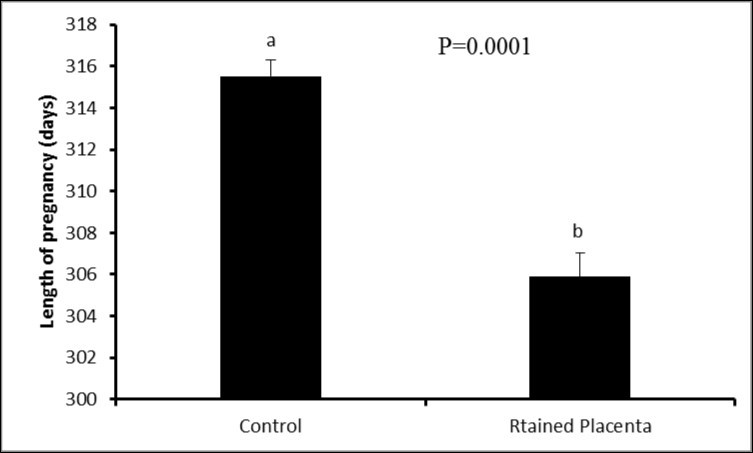
Figure 2. First post-partum estrous in cows with and without retained fetal membranes (P<0.05)
Figure 3. Days open in cows with and without retained fetal membranes (P<0.05)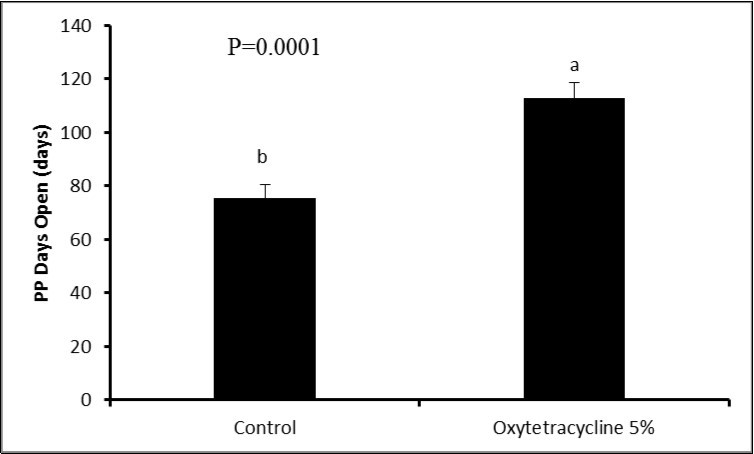
Figure 4. number of services per conception in cows with and without retained fetal membranes (P<0.05)
| Reproductive parameters | Treatment group | Control group |
| First postpartum estrus | 62.62 ± 3.88a | 47.68±3.02b |
| Days open | 112.77 ± 5.92a | 75.4 ± 4.91b |
| Service per conception | 2.85 ± 0.27 | 2.32 ± 0.12 |
All data expressed as mean ± SEM. Different letters means significant difference (P<0.05)
Effect of oxytetracycline 5% treatment on postpartum reproductive performance in buffalo cows with retained fetal membranes
1. Effects of oxytetracycline treatments on the first postpartum estrus
The buffalo cows which suffered from retained placenta showed more prolonged days (15 days) to the first estrus after parturition when compared to the buffalo cows which gave normal birth without retained placenta (P<0.05)
2. Effects of Oxytetracycline treatments on days open
The buffalo cows which suffered from retained placenta showed more prolonged days (37 days) post-partum days open when compared to the buffalo cows which gave normal birth without retained placenta (P<0.05)
3. Effects of Oxytetracycline treatments on number of services per conception
The buffalo cows which suffered from retained placenta showed more number of services per conception when compared to the buffalo cows which gave normal birth without retained placenta but with tendency significant (P<0.06)
Discussion
In the present study the buffalo cows with short length of gestation (305.8 ± 1.1) were found to have retained fetal membranes than cows with normal gestational length (315.5 ± 0.8).
Reproductive performance is economically important in dairy buffaloes because it affects milk yield and culling rate. Poor reproductive performance due to post-partum reproductive disorders can reduce the number of born calves and milk production and increase the cost of nutrition, therapy and artificial insemination.
Retained fetal membranes have adverse effect on reproductive performance as it represents a significant risk for endometritis and toxic puerperal metritis. Therefore, the purpose of the present study was to investigate the effect of oxytetracycline treatment postpartum reproductive performance dairy buffalo-cows with retained fetal membranes. Parameters such as days open, days to first postpartum estrus, number of service per conception, conception rate and calving interval are basic factors to measure reproductive performance.
The duration of the estrous cycle in buffalo is similar to that in cattle, ranging from 17 to 26 days with an average of 21 days 21. However, there is a greater variability of the estrous cycle length in buffalo compared to cattle, with a greater incidence of both abnormally short and long estrous cycles. This may be attributed to various factors including adverse environmental conditions, nutrition and irregularities in secretion of ovarian steroid hormones 22, 23
Archanobacterium pyogenes and E.coli with many others like Staphylococcus spp., Streptococcus spp., and Proteus spp. are frequently isolated from cows with retained placenta and cows with acute metritis 24. Further, E. coli, Archanobacterium pyogenes, Staphylococcus aureus and Fusobacterium necrophorum are mainly isolated in toxic puerperal metritis of buffalo cows 25.
In the present study all the reproductive parameters significantly differed comparing to control group. The results of this study showed that, Manual removal of retained placentae followed by intrauterine 2gm Oxytetracycline Hcl and systemic infusion of oxytetracyclin Hcl injection 5% treated retained placenta was a negative affected in reproductive performance in buffaloe cows. The reproductive indicators of the control group were significantly different (P<0.05) than the treatment groups, Days to first estrous of treatment groups was more prolonged by ( 15 days), delayed exhibition of first post-partum estrus (62.62 ± 3.88 Vs 47.68±3.02) compared to normally calved buffalo cows. These observations agreed with previous studies 26, 27, 28.
Days open of treatment group was more prolonged by (38 days), average days open were (112.77 ± 5.92 Vs 75.4 ± 4.91) for buffalo cows within the control group. This result was consistent with the report of Han and Kim, 2005 29 and Borsberry and Dobson, 1989 30 that proven a crucial effects for retained placenta on the interval from calving to conception than the effect on the delay in the interval from calving to first service.
Paisley et al. 1986 31 showed that manual removal as well as local application of antibiotics impairs uterine defense mechanism. The reason for that is manual removal can cause micro- injuries of the endometrium 32 and therefore elongate the period required for uterine involution.
Number of services per conception was higher in treatment group (2.85 ± 0.27 Vs 2.32 ± 0.12) compared to the control group and showed tendency significant difference between two groups. Our results were similar obtained by previous studies 29, 33, 34
On the other hand, previous studies reported that retained placenta has no negative affected on fertility 35, 36, 37. Altogether, the present study indicated that, short gestation period are important risk factor for development of retained placenta, which had reduced fertility and changes the postpartum reproductive performance in dairy buffloes. Retained placenta has detrimental effect on reproductive performance in dairy buffalo cows.