Carbapenem-resistant Enterobacterales at a quaternary public hospital in Durban, KwaZulu-Natal: Ascertaining the clinical and molecular paradigm shift following COVID-19
Abstract
Background
Extensive carbapenem use has resulted in an increasing occurrence of difficult-to-treat resistant gram-negative bacteria (DTR-GNB), such as carbapenem-resistant Enterobacterales (CREs). The international antimicrobial resistance (AMR) landscape was profoundly impacted due to varying antibiotic prescribing practices following coronavirus disease 2019 (COVID-19). The resultant evolution in multidrug-resistant organism (MDRO) trends underscored this study’s aim in establishing the COVID-19 pandemic’s influence on the prevalence, molecular characterisation, and clinical outcome of CRE infections at a South African quaternary public hospital.
Methods
Demographics, microorganism identification, antibiograms, and patient outcomes with associated factors were extracted retrospectively from electronic records at Inkosi Albert Luthuli Central Hospital (IALCH). Carbapenemase-encoding genes from CRE isolates were prospectively identified by conventional multiplex polymerase chain reaction. Comparisons between the pre-COVID-19 (01 January 2018 to 05 March 2020) and post-COVID-19 (06
March 2020 to 31 May 2023) periods were conducted.
Results
A total of 1481 (n) CRE samples were analysed from 985 patients, with an age range of 2 days to 91-years-old. The post-COVID-19 CRE prevalence (13.58%) was more than double the pre-pandemic prevalence (6.72%). Klebsiella pneumoniae (85.7%; 1269/1481) was the predominant microbial species, followed by Enterobacter cloacae (6.4%; 95/1481), both of which exhibited in vitro resistance to majority of antibiotic classes. Of the 357 molecularly-tested isolates, 322 (90.2%) were carbapenemase-producers, with an upsurge in blaOXA-48 (20.8%; 15/72 versus 61.2%; 137/224, p < 0.001) and decrease in blaNDM (69.4%; 50/72 versus 17.9%; 40/245, p < 0.001) in Klebsiella pneumoniae relative to the COVID-19 periods. Overall, majority of deaths (42.2%; 57/135) occurred within 7 days of CRE isolation, while logistic regression analysis showed that intensive/high-care unit admission and sterile site infection were significantly associated with increased all-cause mortality.
Conclusion
There is a rising CRE burden and shift in carbapenemase-encoding gene prevalence within this referral healthcare institution following COVID-19. This study highlights the need for ongoing epidemiological surveillance and suggests conducting routine carbapenemase testing for CRE infections amongst selected patients. Multisectoral collaborative approaches streamlining accessibility to the newer β-lactam/β-lactamase inhibitor (BL/BLI) drug combinations, such as ceftazidime-avibactam, including agents like aztreonam and cefiderocol, are urgently required to provide directed therapy, thereby potentially improving patient clinical outcomes.
Article Information
- Received
- Accepted
- Published
Academic Editor: Rajagopalan N R, Assistant Professor, Department of Chemistry, St. Joseph’s College of Engineering, Chennai
Checked for plagiarism: Yes
Review by: Single-blind
Copyright © 2026 Nitesh Brijlal, et al.
 This is an open-access article distributed under the terms of the Creative Commons Attribution License, which permits unrestricted use, distribution, and reproduction in any medium, provided the original author and source are credited.
Corresponding author: Nitesh Brijlal, Department of Medical Microbiology, National Health Laboratory Services, KwaZulu-Natal, Durban, South Africa and School of Laboratory Medicine and Medical Sciences, Nelson R Mandela School of Medicine, University of KwaZulu-Natal, Durban, South Africa —
Competing Interests
The authors declare that no financial, professional, personal or other competing interests exist.
Funding
No specific funding statement was provided by the authors.
Data Availability
Data is available upon reasonable request from the author, NB, following permission from the National Health Laboratory Service and study site, Inkosi Albert Luthuli Central Hospital.
Acknowledgements
The authors are grateful to the Department of Medical Microbiology laboratory staff at Inkosi Albert Luthuli Central Hospital for storing of CRE isolates and the National Institute for Communicable Diseases for the provision of control strains. The authors also wish to thank the National Health Laboratory Service and study site for the data, Mr Diyothan Pillay for assistance with conducting molecular laboratory work, Mr Brian Brummer for aiding with statistical analyses and data visualisations, and Mr Malcolm Ellappen for guidance on the funding application process.
Citation:
Introduction
The widespread use of carbapenems has resulted in the rapidly increasing occurrence and distribution of difficult-to-treat resistant gram-negative bacteria (DTR-GNB), such as carbapenem-resistant Enterobacterales (CREs), worldwide.1, 2, 3 Infections caused by CREs pose a serious public health threat and are associated with significant patient morbidity and mortality.4 Additionally, they have been categorised as “critical” according to the first published global priority pathogen list in 2017 by the World Health Organization (WHO).5
Enterobacterales are currently recognised as the leading cause of serious community-acquired and nosocomial infections and are among the commonest bacteria isolated from clinical specimens.6,7 The production of beta(β)-lactamase (bla) enzymes, called carbapenemases, is the most frequently-mediated mechanism by which Enterobacterales develop carbapenem resistance.2,7,8,9 Carbapenemases belong to the Ambler structural classification, being serine β-lactamases (Class A and D) and metallo-β-lactamases (Class B), which differ in their response to antimicrobial agents, impacting selection choices in patient management.4,8,10
The landscape of antimicrobial resistance (AMR) was greatly challenged during the outbreak of coronavirus disease 2019 (COVID-19) caused by severe acute respiratory syndrome coronavirus 2 (SARS-CoV-2).11,12,13 The COVID-19 pandemic had impacted negatively on the implementation of antimicrobial stewardship (AMS) programmes, escalating the prevalence of multidrug-resistant organisms (MDROs) secondary to the mass consumption (and misuse) of broad-spectrum antibiotics.14,15 Global data revealed blaKPC, blaOXA-48 and blaNDM to be the dominant carbapenemase-encoding genes in these CRE infections, comprising predominantly of respiratory and bloodstream specimen types, with some isolates harbouring multiple carbapenemases.16,17,18,19
However, although COVID-19 had been associated with an increased incidence in hospital-acquired resistant bacterial co-infections,20,21,22 some studies revealed that prolonged personal protective equipment (PPE) use and strict, well-enforced infection prevention and control (IPC) strategies during this time period, were beneficial in minimising the spread of MDROs in certain healthcare environments.11,23,24
Maphumulo et al. demonstrated a prevalence of blaNDM-1 and blaOXA-181 carbapenemase genes in a retrospective study comprising 194 clinical CRE isolates from Inkosi Albert Luthuli Central Hospital (IALCH), a quaternary public sector hospital in Durban, South Africa (SA), during 2013 to 2017, which was prior to COVID-19.25 Whether the paradigm had now shifted to encompass other or multiple carbapenemase-encoding genes in this adult and paediatric population, especially following amplified antibiotic prescribing practises during the COVID-19 pandemic, remains unknown.
The paucity of such significant data within this specialised referral health facility impedes the implementation of swift IPC measures, the strengthening of AMS interventions, and the provision of baseline information on currently circulating carbapenemases to advocate for newer therapeutic agents active against certain carbapenemase-producing Enterobacterales (CPEs). This study therefore aimed to determine the influence of COVID-19 on the comparative prevalence, demography, molecular characterisation, and patient clinical outcomes of CRE infections at IALCH.
Methodology
Study design and setting
The study comprised a retrospective, descriptive, single-centre chart review using electronically-stored microbiological and patient clinical records, as well as a prospective, laboratory-based molecular characterisation of carbapenemase-encoding genes from stored CRE clinical isolates at IALCH.
Study period
The total study period (01 January 2018 to 31 May 2023) was divided into the pre-COVID-19 period, defined from 01 January 2018 to 05 March 2020 (first COVID-19 case in SA), while the period from 06 March 2020 to 31 May 2023 resembled the post-COVID-19 period.
Study definitions
A CRE was defined as a bacterium belonging to the Enterobacterales order that was resistant to at least one carbapenem antibiotic (ertapenem, imipenem or meropenem) in accordance to the Clinical and Laboratory Standards Institute (CLSI) Performance Standards for Antimicrobial Susceptibility Testing (33rd edition, 2023) guidelines.26 For bacteria intrinsically less susceptible to imipenem (e.g. Proteus spp., Providencia spp. and Morganella spp.), resistance to a carbapenem other than imipenem was required to classify as a CRE.
Study population and CRE isolate selection
Inclusion criteria
IALCH patients of all ages in whom CREs were identified from any anatomical site and laboratory-stored isolates conforming to the CLSI minimum inhibitory concentration (MIC) clinical breakpoint interpretative criteria for Enterobacterales against carbapenems, were included. A CRE cultured after 21 days of the last CRE infection for the same patient, obtained from the same specimen type/site, and attaining the same antibiogram, was deemed a new case.
Exclusion criteria
Patient information not attributable to CRE infections, microbiological specimen workup results not demonstrating in vitro resistance to any carbapenem (including intermediate susceptibility), and data not applicable to the study period, were excluded. Rectal swab specimens submitted for CRE screening, including patient isolates that clinically represented CRE colonisation and did not warrant treatment, were also excluded.
Data collection and management
Retrospective microbiological and patient clinical data were extracted from the hospital’s integrated software platform, MEDITECH, and the National Health Laboratory Service (NHLS) Laboratory Interface System (LIS) database, LabTrak/TrakCare. This included patient demographics, specimen characteristics, microorganism identification, antibiogram profiles, and clinical outcome.
Following eligibility criteria application and filtering, continuous, de-duplicated data encompassing the total study period was derived and stratified per the relative COVID-19 time periods (Figure 1). A password-protected Microsoft Excel® Workbook document was used for data compilation, thereby ensuring restricted access. Data was securely stored electronically and will be destroyed after five years following research completion and publication.
Figure 1. Flowchart depicting study sample derivation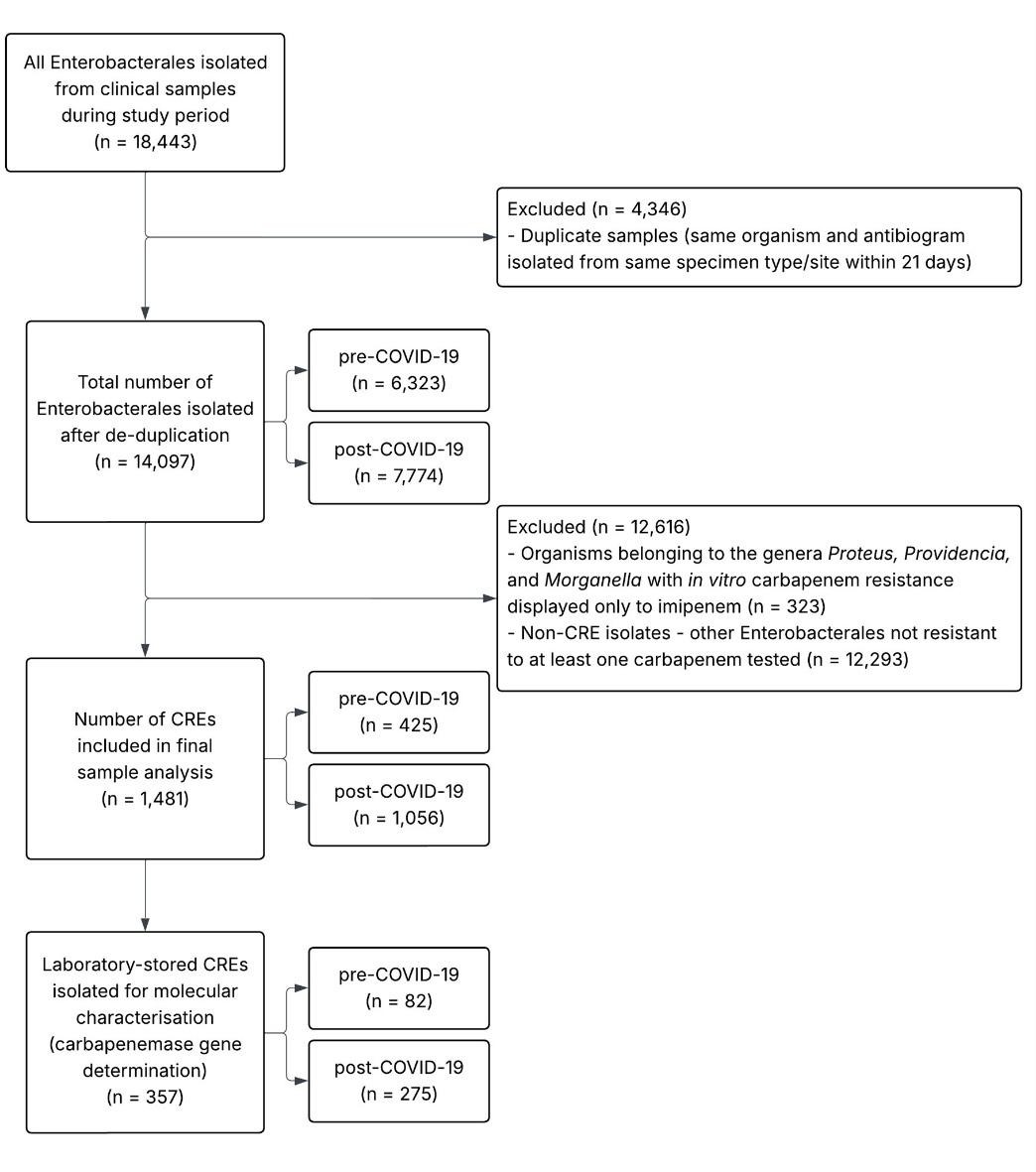
Download figure
Data analysis and statistical planning
Descriptive statistics were performed on patient demography, CRE isolate characteristics and AST results. Frequencies and percentages were calculated to summarise categorical variables. Measures of central tendency and dispersion of numerical data were calculated using means and standard deviations for normally-distributed variables, or medians and interquartile ranges for skewed variables. Susceptibility and resistance were calculated as the percentage relative to the proportion of species resulted against each antibiotic tested. Pearson’s chi-squared test, Fisher’s exact test, or the Wilcoxon rank sum test (Mann-Whitney U test) were used to test for association between characteristics of interest and patient clinical outcome in the pre- and post-COVID-19 periods. Logistic regression models were performed to identify factors associated with in-hospital mortality and odds ratios (ORs) were reported with a 95% confidence interval (95% CI). Data was analysed in R Statistical Software (version 4.5.0) and a p-value less than or equal to 0.05 (p ≤ 0.05) was considered statistically significant.
Phenotypic characterisation
Microbiological identification of clinical specimens was done using either the VITEK® 2 (bioMérieux, Marcy-l’Étoile, France) automated system, the VITEK® MS PRIME MALDI-TOF [Matrix-assisted laser desorption/ionization-time of flight mass spectrometry (bioMérieux, Marcy-l’Étoile, France)] automated system, or a combination of the above. Antimicrobial susceptibility testing (AST) was done either via Kirby-Bauer disk diffusion, the VITEK® 2 automated system, or an Epsilometer test (E-test).
Genotypic (molecular) characterisation
The identification of carbapenemase-encoding genes was done via conventional multiplex polymerase chain reaction (PCR), as outlined in Figure 2.
Figure 2. PCR workflow process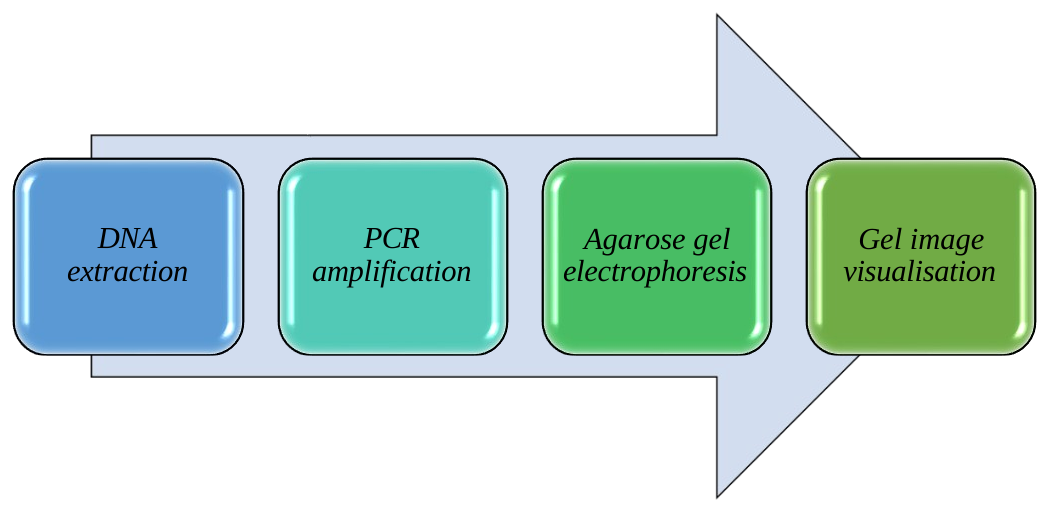
Download figure
DNA extraction
Following thawing and subculturing of stored CRE isolates, DNA was extracted using the Lucigen MA150E-QuickExtract™ DNA Extraction Solution protocol (Diagnostech, South Africa). Multiple colonies of each isolate were suspended in 100 µL of nuclease-free water (Qiagen, Hilden, Germany) to make a bacterial suspension in a 1.5 mL microcentrifuge tube. Thereafter, 150 µL of this solution was transferred into a separate PCR tube containing 150 μL of DNA Extraction Solution. This was subsequently mixed by vortexing for 15 seconds, heated at 98°C for 15 minutes, and centrifuged for 15 minutes at 4°C at 12,000 rpm. The DNA template for PCR was extracted from the resultant supernatant and stored in a -20°C freezer (Defy, Midrand, South Africa) until further downstream use.
Oligonucleotide primers
Previously-published oligonucleotide primer sequences for the amplification of carbapenemase-encoding genes (blaKPC, blaIMP, blaNDM, blaVIM, blaOXA-48, and blaGES) were used for the assay (Table 1).
Table 1. Oligonucleotide primers used in the study (adapted from Watahiki et al., 2020) 27| Targetedgene groups | Primername | Sequence (5’ to 3’ direction) | Length(bases) | Ampliconsize (bp) |
| blaKPC | mc-kpc-f | CGGAACCATTCGCTAAACTCG | 21 | 322 |
| mc-kpc-r | AACAAATTGGCGGCGGCGT | 19 | ||
| blaIMP | mc-imp-f | TCTCRATCTATCCCCACGTATGC | 23 | 269 |
| mc-imp-r | GCGGACTTTGGCCAAGCTTCTA | 22 | ||
| blaNDM | mc-ndm-f | CGGTTTGGCGATCTGGTTTT | 20 | 207 |
| mc-ndm-r | GACCGGCAGGTTGATCTCC | 19 | ||
| blaVIM | mc-vim-f | GTTTGGTCGCATATCGCAAC | 20 | 155 |
| mc-vim-r | CCAATTTGCTTYTCAATCTCCG | 22 | ||
| blaOXA-48 | mc-oxa48-f | GCTCTGGAATGAGAATAAGCAGCA | 24 | 125 |
| mc-oxa48-r | TAACCACGCCCAAATCGAG | 19 | ||
| blaGES | mc-ges-f | CTGTGGCTAAAGTCCTCTATGGCG | 24 | 94 |
| mc-ges-r | GTCGCGTCTCCCGTTTGGTT | 20 |
PCR amplification
The multiplex reactions were prepared using 12.5 µL of Thermo Scientific™ Dream Taq™ PCR Master Mix (2X) (Thermo Fisher Scientific, Waltham, Massachusetts, United States), 0.5 µL (1 µM) of each forward and reverse primer (Inqaba Biotech, Pretoria, South Africa) specific to blaKPC, blaIMP, blaNDM, blaVIM, blaOXA-48, and blaGES, 1.5 µL of nuclease-free water (Qiagen, Hilden, Germany), and 5 µL of template DNA.
PCR amplification was carried out using a GeneAmp® PCR System 9700 Thermal Cycler (Thermo Fisher Scientific, Waltham, Massachusetts, United States) and comprised the following conditions: an initial activation step at 95°C for 5 minutes, followed by 25 cycles of denaturation at 95°C for 30 seconds, annealing at 60°C for 1 minute 30 seconds, extension at 72°C for 1 minute, and a final extension step at 68°C for 10 minutes.27
Positive control strains confirmed to carry the target carbapenemase-encoding genes were obtained from the National Institute for Communicable Diseases (NICD) of South Africa and, together with negative control (non-CRE) strains, were included in the PCR assays, thereby ensuring accuracy and reliability of the results.
Agarose gel electrophoresis
To confirm successful amplification and visualise the PCR amplicons, agarose gel electrophoresis was performed. The PCR products were loaded onto a 1.5% agarose gel (TopVision Agarose Tablets 0.5g and Invitrogen™ 10X TBE Buffer, Thermo Fisher Scientific, Waltham, Massachusetts, United States). Each well was loaded with 2 µL of 6X DNA Loading Dye mixed with GelRed dye (Thermo Fisher Scientific, Waltham, Massachusetts, United States) and 6 µL of the PCR product. The gel electrophoresis was run at 80 V for 2 hours (Bio-Rad PowerPac™ Universal Electrophoresis Power Supply, California, United States) and the resultant gel image visualised under an ultraviolet (UV) transilluminator (Bio-Rad GelDoc™ Go Imaging System, California, United States) and photographed.
A 100 bp size ladder (Invitrogen™, Thermo Fisher Scientific, Waltham, Massachusetts, United States) was used as a marker for amplicon detection. The results obtained were compared against the control band sizes to ascertain if the sample DNA contained any carbapenemase-encoding gene(s) of interest, which was documented.
Ethical considerations
Ethical approval for this study was obtained in full from the Biomedical Research Ethics Committee (BREC) of the University of KwaZulu-Natal (UKZN) (protocol reference number BREC/00005907/2023) and the KwaZulu-Natal Department of Health (KZN DoH) Ethics Committee (NHRD Ref: KZ_202307_012). The project was also supported by the Academic Affairs and Research Management System (AARMS) of the NHLS (K-Project PR2448733).
Gatekeeper permission was obtained from the medical manager at IALCH and departmental permission from the Head of Department of Medical Microbiology in the KZN Academic Complex. Patient consent was not required as this was a retrospective, descriptive analysis with molecular characterisation where patient personal or identifier details from the electronic databases were not shown, thereby ensuring and maintaining confidentiality.
Results
Prevalence of CRE infections at IALCH
The overall prevalence of CRE infections (Figure 2) was 10.5% (1,481/14,097). Notably, the post-COVID-19 prevalence was more than double the pre-COVID-19 prevalence, at 13.58% and 6.72%, respectively. During the initial five years of the study, a CRE surge was followed by a stable plateau, occurring at annual intervals. However, a concerning upward continuous trend from January 2022 was evident, necessitating the need for awareness and ongoing surveillance.
Figure 3. Prevalence of CREs at IALCH (2018 to 2023)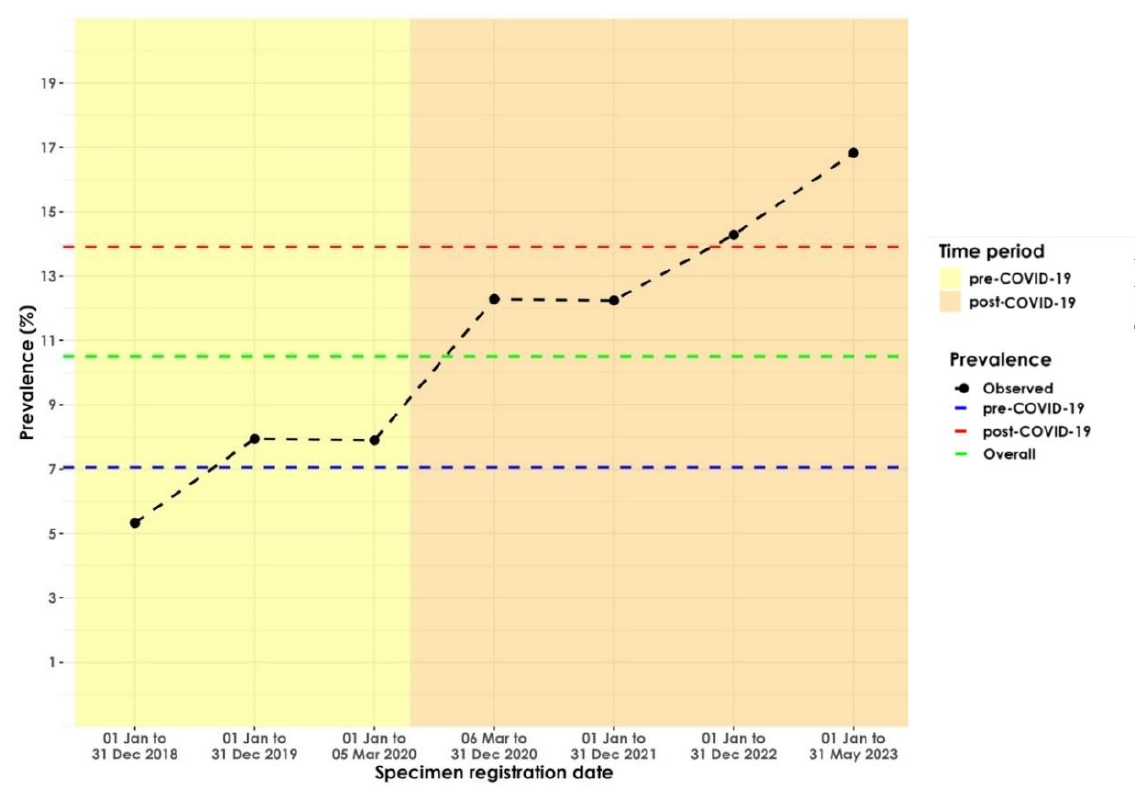
Download figure
Following the onset of COVID-19 in SA (declared on 06 March 2020), the CRE prevalence of 12.29% (Table 1) had risen by 4.39% compared to the pre-pandemic period of the same year (7.90%). Thereafter, the number of CREs at IALCH had increased on a yearly basis, averaging 29 CRE isolates per month (n = 841, 29 months).
Table 2. CREs isolated as a proportion of de-duplicated Enterobacterales (2018 to 2023)| Time period | 01 Jan to31 Dec 2018 | 01 Jan to31 Dec 2019 | 01 Jan to05 Mar 2020 | 06 Mar to31 Dec 2020 | 01 Jan to31 Dec 2021 | 01 Jan to31 Dec 2022 | 01 Jan to31 May 2023 |
| CREs isolated (n) | 157 | 227 | 41 | 215 | 273 | 395 | 173 |
| De-duplicatedEnterobacterales (n) | 2,946 | 2,858 | 519 | 1,750 | 2,230 | 2,766 | 1,028 |
| Percentage (%) | 5.33 | 7.94 | 7.90 | 12.29 | 12.24 | 14.28 | 16.83 |
|---|
Demographic profile
A total of 1,481 de-duplicated CRE isolates belonging to two study periods were analysed: a pre-COVID-19 period (n = 425 isolates) and a post-COVID-19 period (n = 1,056 isolates). The comparative general characteristics of the study population are summarised in Table 3.
Table 3. Patient characteristics relative to number of CRE isolates| Variable | Overall | pre-COVID-19 | post-COVID-19 |
|---|---|---|---|
| N = 1,481 | N = 425 | N = 1,056 | |
| n (%) | n (%) | n (%) | |
| Age categorisation | |||
| Neonates and infants | 508 (34.3) | 172 (40.5) | 336 (31.8) |
| 0-6 days (early neonates) | 17 (1.1) | 8 (1.9) | 9 (0.9) |
| 7-27 days (late neonates) | 110 (7.4) | 51 (12.0) | 59 (5.6) |
| 28-364 days (post-neonatal infants) | 381 (25.7) | 113 (26.6) | 268 (25.4) |
| Children | 155 (10.5) | 32 (7.5) | 123 (11.6) |
| 1-4 years (young children) | 99 (6.7) | 19 (4.5) | 80 (7.6) |
| 5-9 years (older children) | 56 (3.8) | 13 (3.1) | 43 (4.1) |
| Adolescents | 106 (7.2) | 26 (6.1) | 80 (7.6) |
| 10-14 years (young adolescents) | 66 (4.5) | 21 (4.9) | 45 (4.3) |
| 15-19 years (older adolescents) | 40 (2.7) | 5 (1.2) | 35 (3.3) |
| Adults | 615 (41.5) | 169 (39.8) | 446 (42.2) |
| 20-24 years (young adults) | 96 (6.5) | 27 (6.4) | 69 (6.5) |
| 25-39 years (early adulthood) | 252 (17.0) | 64 (15.1) | 188 (17.8) |
| 40-59 years (middle-aged adults) | 267 (18.0) | 78 (18.4) | 189 (17.9) |
| Elderly [≥60 years (older adults)] | 97 (6.5) | 26 (6.1) | 71 (6.7) |
| Gender | |||
| Female | 707 (47.7) | 194 (45.6) | 513 (48.6) |
| Male | 774 (52.3) | 231 (54.4) | 543 (51.4) |
| Patient location | |||
| Intensive and high care units | 880 (59.4) | 262 (61.6) | 618 (58.5) |
| Adult medical/surgical | 163 (11.0) | 50 (11.7) | 113 (10.7) |
| Cardiothoracic | 56 (3.8) | 10 (2.4) | 46 (4.3) |
| Neonatal | 210 (14.2) | 78 (18.3) | 132 (12.5) |
| Neurosurgical | 32 (2.2) | 10 (2.4) | 22 (2.1) |
| Paediatric | 281 (19.0) | 88 (20.7) | 193 (18.3) |
| Transplant | 20 (1.3) | 2 (0.5) | 18 (1.7) |
| Trauma | 118 (7.9) | 24 (5.6) | 94 (8.9) |
| General wards | 508 (34.3) | 135 (31.8) | 373 (35.3) |
| Adult haematology/oncology | 80 (5.4) | 20 (4.7) | 60 (5.7) |
| Adult medical | 152 (10.3) | 44 (10.4) | 108 (10.2) |
| Adult surgical | 111 (7.5) | 26 (6.1) | 85 (8.1) |
| Obstetrics/gynaecology/labour ward | 21 (1.4) | 4 (0.9) | 17 (1.6) |
| Paediatric haematology/oncology | 52 (3.5) | 12 (2.8) | 40 (3.8) |
| Paediatric medical | 68 (4.6) | 19 (4.5) | 49 (4.6) |
| Paediatric surgical | 24 (1.6) | 10 (2.4) | 14 (1.3) |
| Outpatients/specialist clinics (all ages and disciplines) | 93 (6.3) | 28 (6.6) | 65 (6.2) |
Age groupings are represented via standardised age-disaggregated health data by life stage, as recommended by the 2030 Agenda for Sustainable Development Goals, allowing for global harmonisation.28 Patient age distribution ranged from 2 days to 91 years old, with a median age of 12 years, 18 years and 16 years corresponding to the pre-pandemic, post-pandemic and overall period, respectively (IQR 0-39). Neonates and infants exhibited the solitary age category to obtain a reduction in CRE burden during the post-COVID-19 period (40.5%; 172/425 versus 31.8%; 336/1,056). In addition to males (52.3%, 774/1,481), most CREs were attributed to patients admitted to intensive and high-care units (59.4%, 880/1,481).
Table 4. Gender distribution relative to number of individual patients with CREs| Gender | OverallN = 985 | pre-COVID-19N = 310 | post-COVID-19N = 675 |
|---|---|---|---|
| n (%) | n (%) | n (%) | |
| Female | |||
| Total (any number of CREs) | 454 (46.1) | 136 (43.9) | 318 (47.1) |
| Only 1 CRE | 323 (32.8) | 102 (32.9) | 221 (32.7) |
| Multiple (≥2) CREs | 131 (13.3) | 33 (10.6) | 100 (14.8) |
| Average number of CREs, if multiple (384 isolates) | 2.93 | 2.76 | 2.92 |
| Male | |||
| Total (any number of CREs) | 531 (53.9) | 174 (56.1) | 357 (52.9) |
| Only 1 CRE | 393 (39.9) | 137 (44.2) | 256 (37.9) |
| Multiple (≥2) CREs | 138 (14.0) | 35 (11.3) | 104 (15.4) |
| Average number of CREs, if multiple (381 isolates) | 2.76 | 2.60 | 2.75 |
As displayed in Table 4, CREs isolated from laboratory specimens belonged to 985 patients, of which 46.1% (454/985) were females (regardless of isolate count per individual patient). Both genders elicited an increase (4.1-4.2%) in isolating multiple (≥2) CREs per patient in the post-COVID-19 period relative to the pre-COVID-19 period, while a decline (0.2-6.3%) was noted amongst patients attaining only one CRE in the same timeframes. For individual patients with multiple CREs, females averaged 2.93 isolates during the combined period, compared to males at 2.76 isolates.
Microbiology of CRE isolates
Specimen type
Depending on the anatomical site and nature of sample obtained, these were divided into sterile and non-sterile types (Figure 4), with the latter comprising the overall majority (63.8%; 945/1,481). In the respective pre- and post-COVID-19 periods, urine specimens predominated within this category (44.8%; 125/279 versus 40.1%; 267/666), followed by endotracheal
aspirates (26.5%; 74/279 versus 32.3%; 215/666). Blood cultures were the most prevalent sterile sample type (Supplementary Table 1), attaining a significant post-COVID-19 rise (56.2%; 82/146 versus 67.2%; 262/390, p = 0.018). Although fluid/aspirates ranked as the second commonest sterile sample type, a noticeable decrease was recorded in the post-pandemic period (34.9%; 51/146 versus 25.4%; 99/390, p = 0.028).
Figure 4. Distribution of CREs according to type of specimen (n = 1,481)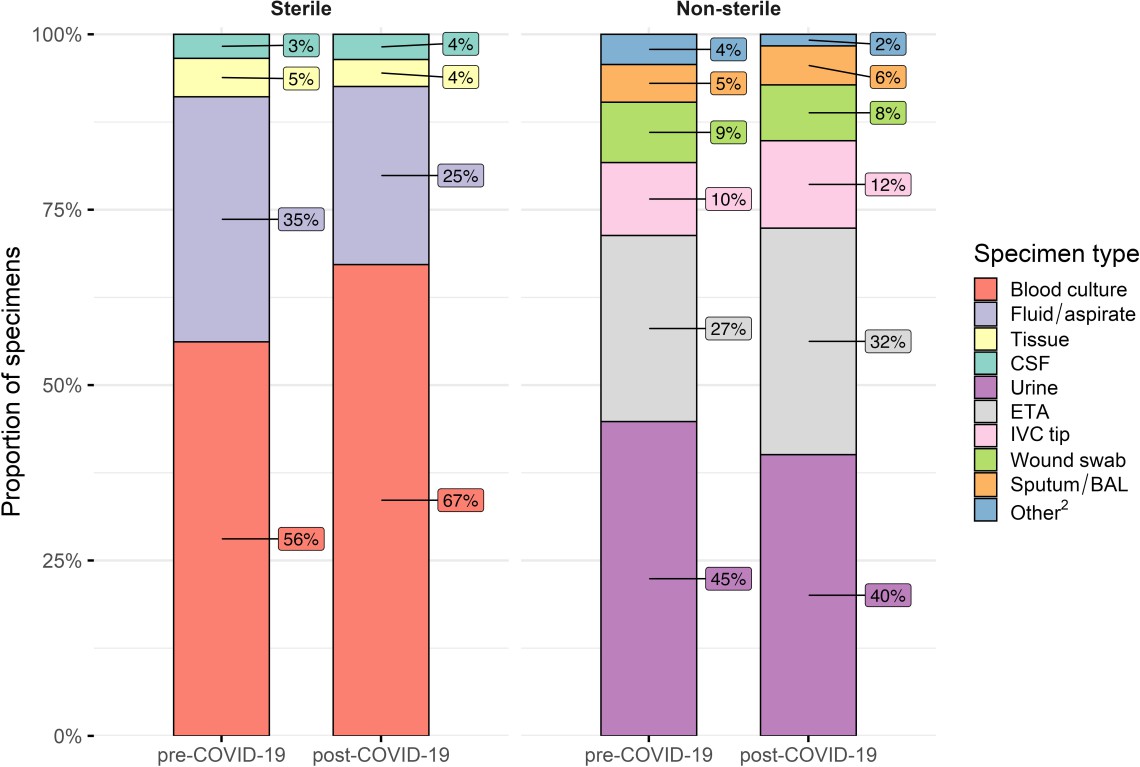
Download figureCSF, cerebrospinal fluid; ETA, endotracheal aspirate; IVC, intravascular catheter; BAL, bronchoalveolar lavage2stool (n = 12), ventricular catheter tip (n = 11); overall period
CRE species
As depicted in Figure 5 and Supplementary Table 2, Klebsiella pneumoniae, which constituted the largest proportion of all CRE species overall (85.7%; 1,269/1,481), was identified in almost triple the number of specimens in the post-COVID-19 period (80%; 340/425 versus 88%; 929/1,056, p < 0.001). A declining insignificant prevalence, however, occurred amongst the other CRE species, namely Enterobacter cloacae (8.2%; 35/425 versus 5.7%; 60/1,056), Serratia marcescens (2.8%; 12/425 versus 2.6%; 28/1,056) and Escherichia coli (2.4%; 10/425 versus 1.3%; 14/1,056).
Figure 5. Comparison of CRE species isolated (n = 1,481)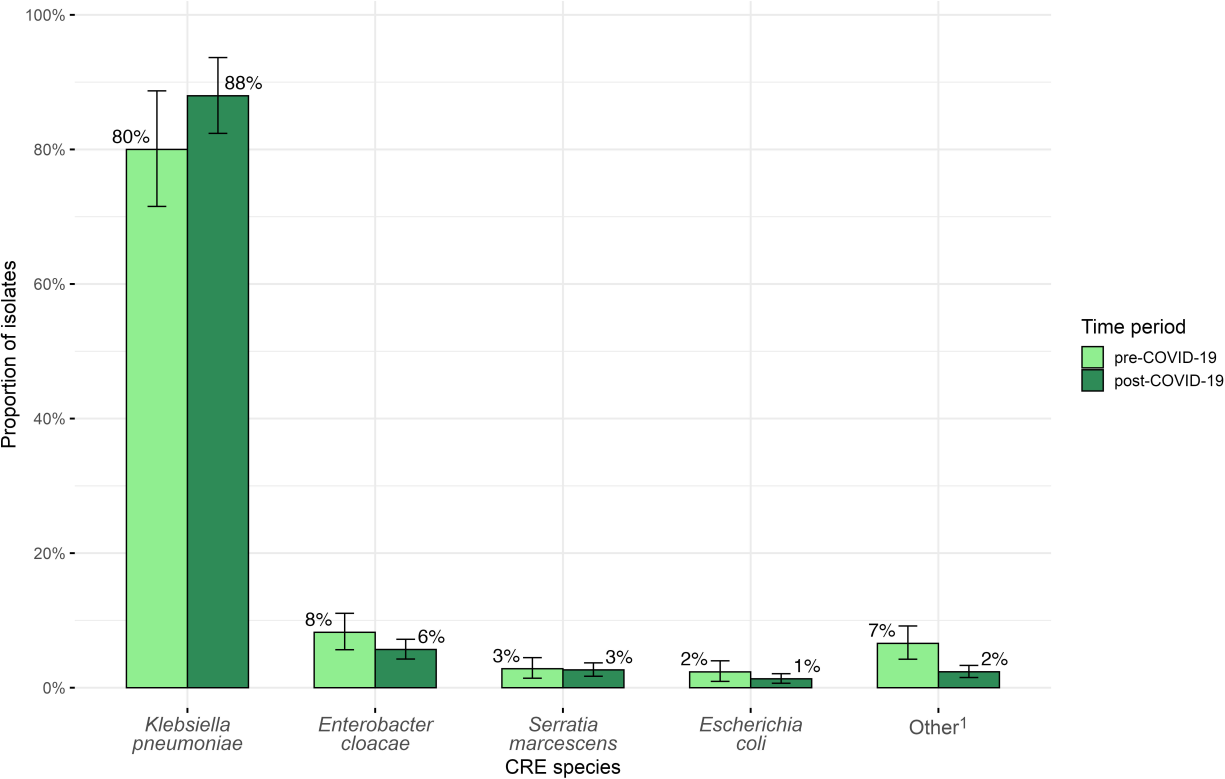
Download figure1Enterobacter species (n = 16), Klebsiella species (n = 9), Citrobacter species (n = 8), Proteus mirabilis (n = 6), Morganella morganii (n = 5), Serratia species (n = 4), Providencia species (n = 3), Raoultella species (n = 1), Salmonella species (n = 1)
Antimicrobial susceptibility/resistance profile
Subsequent to the COVID-19 onset, more than half of the routinely-tested antibiotics demonstrated significantly increased resistance trends (Figure 6 and Supplementary Table 3). Ciprofloxacin was the dominant non-β-lactam agent eliciting this heightened resistance change (80.9%; 344/425 versus 88.3%; 926/1,049, p < 0.001). Although low overall, a notable 6.2% rise in tigecycline resistance relative to the pre-pandemic period (4%; 15/376 versus 10.2%; 100/979, p < 0.001), was manifest (excluding intrinsically-resistant Proteus spp., Providencia spp., and Morganella spp.).
Regarding carbapenems, the comparative resistance to imipenem and meropenem decreased slightly (3.7% and 4%, respectively), while ertapenem was associated with the highest escalation in resistance (16.6%). The aminoglycoside class represented the most considerable resistance decline following COVID-19; gentamicin resistance dropped by 15.6% (83.9%; 349/416 versus 68.3%; 709/1,038, p < 0.001) and amikacin by a substantial 26.1% (58.9%; 249/423 versus 32.8%; 342/1,042, p < 0.001).
Figure 6. Comparative resistance profile trends of CREs against various antibiotics tested in vitro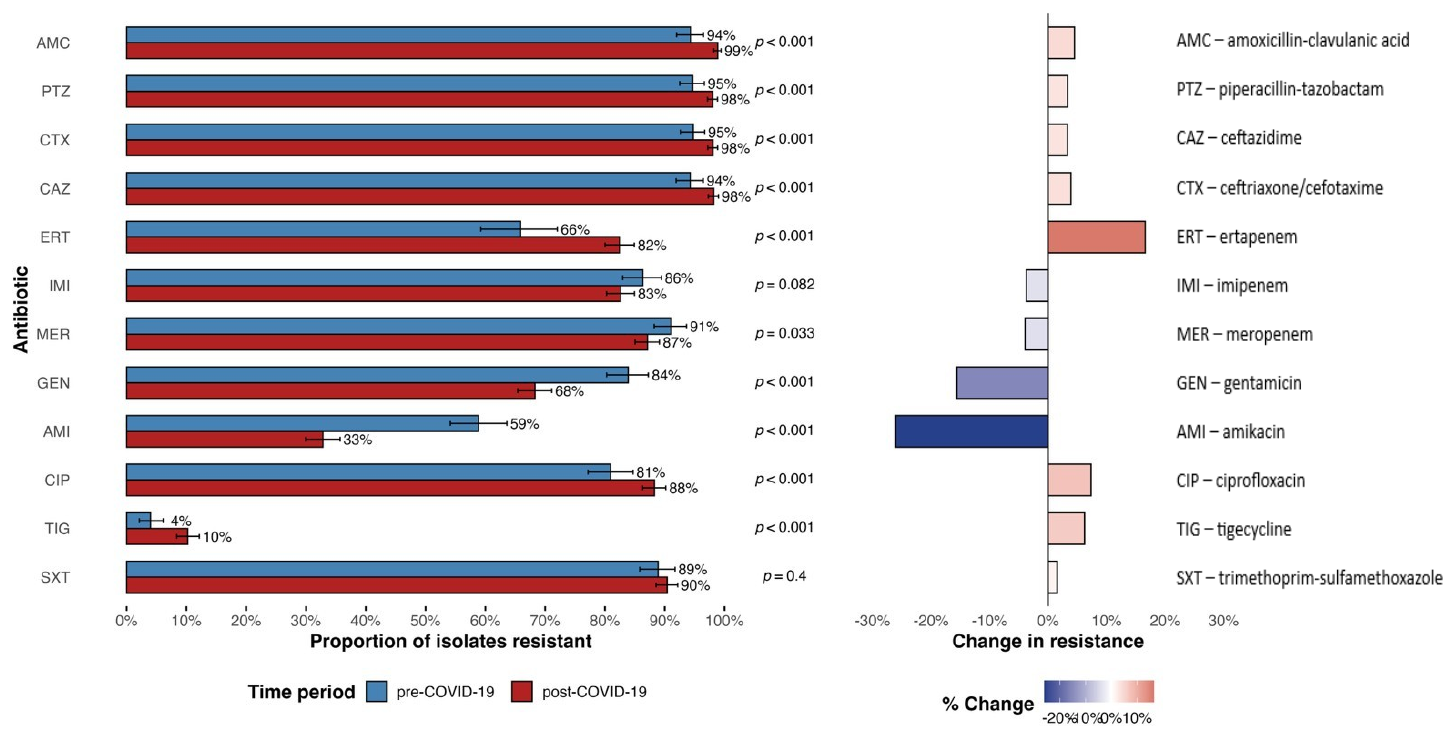
Download figure
Genotypic characterisation of CRE isolates
Conventional PCR was conducted on a total of 357 laboratory-stored CRE isolates, of which approximately three-quarter (77%; 275/357) belonged to the post-COVID-19 period.
Figure 7. Representative gel electrophoresis results showing molecular detection of target carbapenemase-encoding genes (blaKPC, blaIMP, blaNDM, blaVIM, blaOXA-48, and blaGES)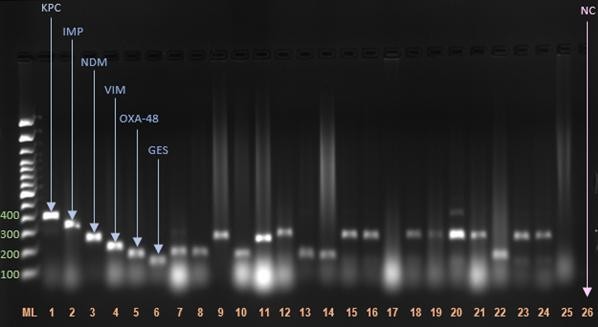
Download figure
The detection of target PCR products is portrayed in Figure 7. Lane ML represents the 100 bp DNA molecular ladder, lanes 1-6 correspond to the positive controls (blaKPC, blaIMP, blaNDM, blaVIM, blaOXA-48, and blaGES, as annotated), and lane 26 (blank) represents the negative control (NC). Lanes 7-25 resemble the CRE isolates tested – lanes 7-8, 10, 13-14 and 22 are positive for blaOXA-48 only; lanes 9, 11, 15-16, 18-19, 21 and 23-24 are positive for blaNDM only; lane 12 is positive for blaIMP only; lanes 17 and 25 are negative for any of the six carbapenemase-encoding gene targets; and lane 20 is positive for blaNDM and blaKPC (dual carbapenemases).
Figure 8. Frequency and distribution of carbapenemase-encoding genes in stored CRE isolates undergone molecular detection, total period (n = 357)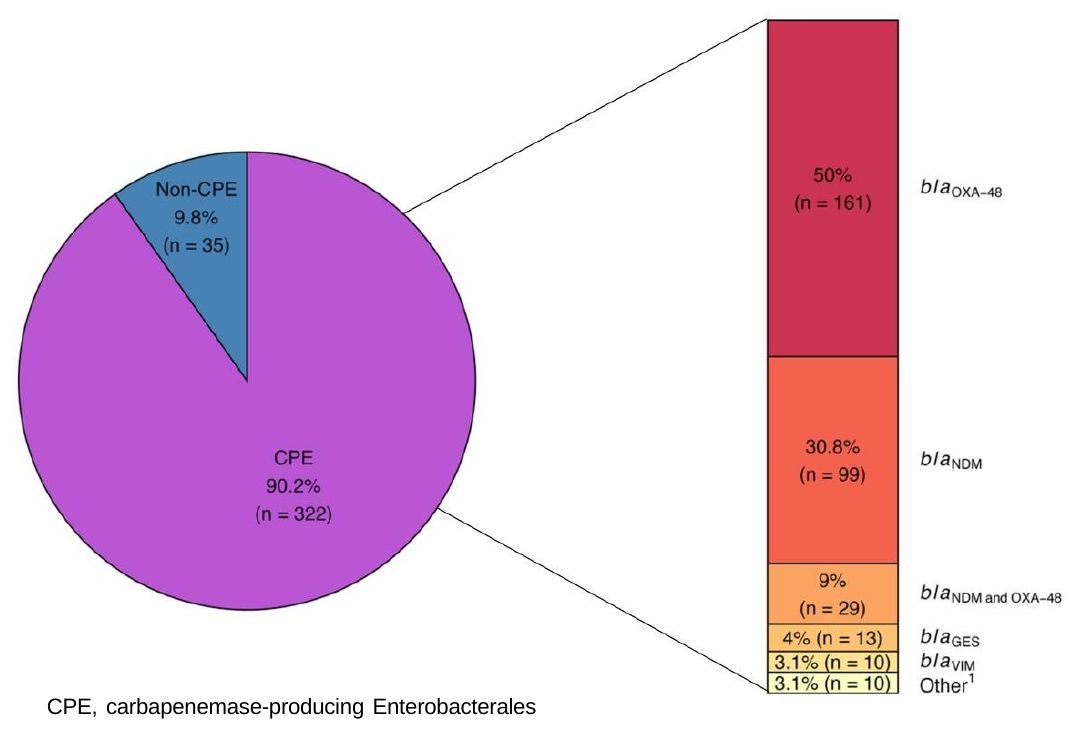
Download figure1blaIMP (n = 3), blaNDM and KPC (n = 2), blaOXA-48 and KPC (n = 1), blaOXA-48 and VIM (n = 1),
blaNDM and GES (n = 1), blaOXA-48 and KPC and IMP (n = 1), blaOXA-48 and KPC and VIM (n = 1)
Molecular analysis revealed a vast majority of the isolates to be positive for carbapenemase production (90.2%; 322/357), with half being due to blaOXA-48 (Figure 8). This was followed by blaNDM (30.7%; 99/322) and dual blaNDM and OXA-48 (9%; 29/322). Amongst all the CRE isolates tested, two CPEs were found to contain three carbapenemases each.
The post-COVID-19 period demonstrated a 9.6% decline in CPE rate relative to the pre-pandemic period, denoting a significant molecular paradigm shift, particularly regarding the rise and decline for blaOXA-48 and blaNDM, respectively (Table 5). Notably, Klebsiella pneumoniae accounted for 91.9% (296/322) total CPEs, with a proportionate change reflecting
a greater than 2.9-fold increase in blaOXA-48 (20.8%; 15/72 versus 61.2%; 137/224, p < 0.001) and 3.8-fold decrease in blaNDM (69.4%; 50/72 versus 17.9%; 40/245, p < 0.001) following COVID-19. In addition, CREs containing dual carbapenemases blaNDM and OXA-48 attained a 5.3% rise during the combined period.
Table 5. Carbapenemase-encoding gene detection relative to predominant CRE species| Total specimens for PCRN = 357 | Klebsiella pneumoniaeN = 317 | Other CRE speciesaN = 40 | |||||||
| Carbapenemase-encoding gene(s) | pre-COVID-19N = 82 | post-COVID-19N = 275 | p-value | pre-COVID-19N = 72 | post-COVID-19N = 245 | p-value | pre-COVID-19N = 10 | post-COVID-19N = 30 | p-value |
|---|---|---|---|---|---|---|---|---|---|
| Total detected | n (%)80 (97.6) | n (%)242 (88.0) | 0.0111 | n (%)72 (100) | n (%)224 (91.4) | 0.0061 | n (%)8 (80.0) | n (%)18 (60.0) | 0.601 |
| blaOXA-48 | 16 (20.0) | 145 (59.9) | <0.0011 | 15 (20.8) | 137 (61.2) | <0.0011 | 1 (12.5) | 8 (44.4) | 0.192 |
| blaNDM | 55 (68.8) | 44 (18.2) | <0.0011 | 50 (69.4) | 40 (17.9) | <0.0011 | 5 (62.5) | 4 (22.2) | 0.0781 |
| blaNDM and OXA-48 | 4 (5.0) | 25 (10.3) | 0.151 | 4 (5.6) | 23 (10.3) | 0.231 | 0 (0) | 2 (11.1) | >0.992 |
| Other | 5 (6.2) | 28 (11.6) | 0.171 | 3 (4.2)b | 24 (10.7)c | 0.0932 | 2 (25.0)d | 4 (22.2)e | >0.992 |
| Target not detected | 2 (2.4) | 33 (12.0) | 0.0111 | 0 (0) | 21 (8.6) | 0.0062 | 2 (20.0) | 12 (40.0) | 0.602 |
Patient clinical outcome
As denoted in Table 6, although overall mortality (all-cause) mostly occurred in the neonate and infant age group (36.3%; 49/135), the likelihood of dying amongst adults aged 20-59 years old was more than double during the post-COVID-19 period (AOR = 2.40; 95% CI: 1.09 to 5.42, p = 0.032). There was no gender predilection amid pre-COVID-19-related deaths; however, males attained a 5.2% lower death rate post-COVID-19, with the converse relationship occurring in females by the same measure. Klebsiella pneumoniae accounted for 100% (30/30) and 92.4% (97/105) of pre- and post-pandemic deaths, respectively.
Following COVID-19, univariable and multivariable logistic regression analyses revealed that blaOXA-48 was associated with an increased odds of death (COR = 4.44; 95% CI: 2.02 to 10.9, p < 0.001 and AOR = 3.79; 95% CI: 1.67 to 9.48, p = 0.002) compared to blaNDM only. This association was also true for CREs bearing other uncommon or multiple carbapenemases.
Table 6. Clinical outcome of patients with carbapenemase-encoding gene-positive CRE isolates and factors associated with in-patient mortality| pre-COVID-19 | post-COVID-19 | |||||||||||
| Variable | DischargedN = 50 | DiedN = 30 | COR (95% CI) | p-value | AOR (95% CI) | p-value | DischargedN = 137 | DiedN = 105 | COR (95% CI) | p-value | AOR (95% CI) | p-value |
|---|---|---|---|---|---|---|---|---|---|---|---|---|
| n (%) | n (%) | n (%) | n (%) | |||||||||
| Age categorisation, years | ||||||||||||
| <1 (neonates and infants) | 33 (66.0) | 19 (63.3) | Ref | Ref | 50 (36.5) | 30 (28.6) | Ref | Ref | ||||
| 1-19 (children and adolescents) | 6 (12.0) | 3 (10.0) | 0.87 (0.17 to 3.70) | 0.85 | 1.99 (0.21 to 20.8) | 0.54 | 40 (29.2) | 27 (25.7) | 1.13 (0.58 to 2.19) | 0.73 | 1.53 (0.69 to 3.43) | 0.30 |
| 20-59 (adults) | 9 (18.0) | 7 (23.3) | 1.35 (0.42 to 4.22) | 0.60 | 1.32 (0.21 to 8.65) | 0.76 | 43 (31.4) | 41 (39.0) | 1.59 (0.85 to 2.98) | 0.14 | 2.40 (1.09 to 5.42) | 0.032 |
| ≥60 (elderly) | 2 (4.0) | 1 (3.3) | 0.87 (0.04 to 9.66) | 0.91 | 2.38 (0.07 to 56.8) | 0.58 | 4 (2.9) | 7 (6.7) | 2.92 (0.81 to 11.9) | 0.11 | 4.73 (1.16 to 22.5) | 0.036 |
| Gender | ||||||||||||
| Female | 23 (46.0) | 15 (50.0) | Ref | Ref | 58 (42.3) | 58 (55.2) | Ref | Ref | ||||
| Male | 27 (54.0) | 15 (50.0) | 0.85 (0.34 to 2.12) | 0.73 | 0.69 (0.20 to 2.32) | 0.55 | 79 (57.7) | 47 (44.8) | 0.59 (0.36 to 0.99) | 0.047 | 0.71 (0.41 to 1.24) | 0.23 |
| Patient location at time of CRE isolation | ||||||||||||
| General ward | 19 (38.0) | 6 (20.0) | Ref | Ref | 65 (47.4) | 39 (37.1) | Ref | Ref | ||||
| Intensive and high care unit | 31 (62.0) | 24 (80.0) | 2.45 (0.88 to 7.59) | 0.10 | 6.48 (1.17 to 48.2) | 0.045 | 72 (52.6) | 66 (62.9) | 1.53 (0.91 to 2.58) | 0.11 | 2.09 (1.07 to 4.17) | 0.033 |
| CRE specimen type | ||||||||||||
| Non-sterile | 33 (66.0) | 8 (26.7) | Ref | Ref | 80 (58.4) | 45 (42.9) | Ref | Ref | ||||
| Sterile | 17 (34.0) | 22 (73.3) | 5.34 (2.03 to 15.2) | 0.001 | 7.68 (2.26 to 31.0) | 0.002 | 57 (41.6) | 60 (57.1) | 1.87 (1.12 to 3.14) | 0.017 | 2.10 (1.21 to 3.70) | 0.009 |
| CRE species isolated | ||||||||||||
| Klebsiella pneumoniae | 42 (84.0) | 30 (100) | Ref | – | 127 (92.7) | 97 (92.4) | Ref | – | ||||
| Non-Klebsiella pneumoniae | 8 (16.0) | 0 (0) | 0.00 (NA to NA) | >0.99 | 10 (7.3) | 8 (7.6) | 1.05 (0.39 to 2.75) | 0.93 | ||||
| Surgery during hospitalisation | ||||||||||||
| No | 20 (40.0) | 16 (53.3) | Ref | Ref | 80 (58.4) | 61 (58.1) | Ref | Ref | ||||
| Yes (any type/discipline) | 30 (60.0) | 14 (46.7) | 0.58 (0.23 to 1.45) | 0.25 | 0.24 (0.06 to 0.84) | 0.031 | 57 (41.6) | 44 (41.9) | 1.01 (0.60 to 1.69) | 0.96 | 1.01 (0.55 to 1.85) | 0.99 |
| Target carbapenemase(s) detected | ||||||||||||
| blaNDM | 38 (76.0) | 17 (56.7) | Ref | Ref | 36 (26.3) | 8 (7.6) | Ref | Ref | ||||
| blaOXA-48 | 7 (14.0) | 9 (30.0) | 2.87 (0.92 to 9.32) | 0.070 | 2.25 (0.56 to 9.30) | 0.25 | 73 (53.3) | 72 (68.6) | 4.44 (2.02 to 10.9) | <0.001 | 3.79 (1.67 to 9.48) | 0.002 |
| blaNDM and blaOXA-48 | 2 (4.0) | 2 (6.7) | 2.24 (0.25 to 19.9) | 0.44 | 8.78 (0.60 to 159) | 0.11 | 16 (11.7) | 9 (8.6) | 2.53 (0.83 to 7.95) | 0.10 | 1.89 (0.58 to 6.25) | 0.29 |
| Other | 3 (6.0)a | 2 (6.7)b | 1.49 (0.18 to 9.80) | 0.68 | 4.03 (0.36 to 46.2) | 0.24 | 12 (8.8)c | 16 (15.2)d | 6.00 (2.12 to 18.3) | 0.001 | 4.81 (1.60 to 15.5) | 0.006 |
In addition to sterile specimen types, the isolation of CREs from patients located in intensive and high care units were, after controlling for age and gender, shown by logistic regression analysis to significantly increase the odds of mortality.
Table 7. Time to death in patients with carbapenemase-producing CREs (n = 135)| Variable | OverallN = 135 | pre-COVID-19N = 30 | post-COVID-19N = 105 |
|---|---|---|---|
| Time to death from specimen collection | n (%) | n (%) | n (%) |
| ≤7 days | 57 (42.2) | 15 (50.0) | 42 (40.0) |
| 8-30 days | 47 (34.8) | 11 (36.7) | 36 (34.3) |
| >30 days | 31 (23.0) | 4 (13.3) | 27 (25.7) |
| ≤30 days (combined) | 104 (77.0) | 26 (86.7) | 78 (74.3) |
| ≤7 days | 57 (54.8) | 15 (57.7) | 42 (53.8) |
| 8–30 days | 47 (45.2) | 11 (42.3) | 36 (46.2) |
| Proportion of deaths | 135/322 (41.9) | 30/80 (37.5) | 105/242 (43.4) |
The all-cause in-hospital mortality rate for patients with CPEs was 41.9% (135/322) overall, with a 5.9% increase subsequent to COVID-19 (Table 7). Relative to the majority of total deaths that took place ≤30 days of specimen collection (77%; 104/135), over half had occurred ≤7 days during each COVID-19-related time period (57.7%; 15/30 versus 53.8%; 42/105).
Figure 9. Heatmap depicting selected in vitro antibiotic susceptibility patterns of CRE species and associated carbapenemase-encoding genes in patients that died (n = 135)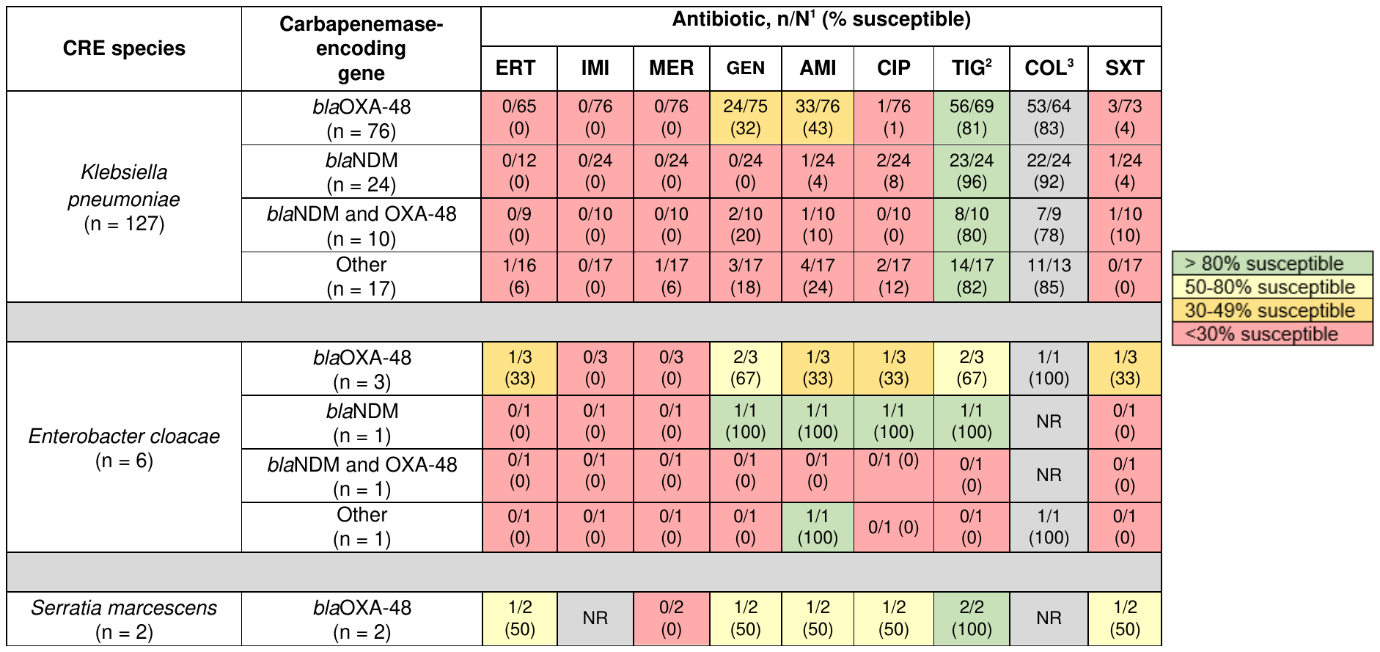
Download figureERT, ertapenem; IMI, imipenem; MER, meropenem; GEN, gentamicin; AMI, amikacin; CIP, ciprofloxacin; TIG, tigecycline; SXT, trimethoprim-sulfamethoxazole; NR, no result/not reported1n = isolates resulted as susceptible; N = total isolates where susceptibility testing result obtained2US FDA (United States Food and Drug Administration) MIC breakpoints (susceptible ≤2 µg/mL; intermediate 4 µg/mL; resistant ≥8 µg/mL)3Broth microdilution result interpreted as per CLSI (33rd ed.) MIC breakpoints (intermediate ≤2 µg/mL; resistant ≥4 µg/mL)
As highlighted in the heatmap (Figure 9), the predominant antibiotic classes relative to the CRE species and carbapenemase-encoding gene(s) identified had attained poor in vitro susceptibility in patients that died. Klebsiella pneumoniae (94.1%; 127/135) harbouring lone blaOXA-48 carbapenemase (56.3%; 76/135) was the rampant microbiological phenotype-genotype implicated in CRE-related mortality. Tigecycline and colistin (tested via broth microdilution) exhibited the most favourable antibiograms; this was followed by amikacin, although to a much lesser extent.
Discussion
The global spread of CRE-associated infections poses a substantial healthcare burden, with carbapenemase-encoding genes being the predominant driver of resistance. This study investigated the comparative pre- and post-COVID-19 prevalence of CREs in a quaternary public hospital in Durban, South Africa, providing insight into demographics, microbiological characteristics, antibiotic susceptibility profiles, molecular characterisation, and patient clinical outcomes. The phenotypic and genotypic paradigm shift ascertained relative to the multitude of aspects particularly analysed amid the COVID-19 time periods, represents, per literature search to date, a novel study for Africa.
The overall CRE prevalence of 10.5% in this healthcare institution constituted 6.72% and 13.58% during the pre- and post-pandemic periods, respectively. This is strikingly alarming in relation to data from the Antimicrobial Testing Leadership and Surveillance (ATLAS) global surveillance programme that reported CRE detection rates in Latin America and Middle-East Africa to be between 4.7-5.7% in 2018 (before COVID-19), increasing only to 10.4-12.9% in 2022 (following COVID-19).29 Additionally, a study by Sader et al comprising 64 medical centres worldwide, including Europe and Asia-Pacific regions, elicited a 4.1% CRE prevalence during 2020-2022,30 which is less than one-third the prevalence in our findings (12.72%) for the same period.
Further to the SA government National State of Disaster declaration in respect of the COVID-19 pandemic onset, the CRE prevalence had declined slightly from 12.29% to 12.24% in the subsequent year, likely due to implementation of the various lockdown restrictions imposed. As supported by other studies, heightened IPC practices and more stringent isolation protocols entail added potential contributory factors for the reduced MDROs seen in some clinical
settings after COVID-19.11,24,31 However, as evidenced by the continuous annual rise in prevalence by more than 2% thereafter, this initial trend in our study was unsustained – an outcome contrary to the verdicts by Linn et al in South-East Asian hospitals,32 but in agreement with a Cape Town study where an almost 3-fold escalation in nosocomial infections occurred during the third COVID-19 wave.33
The median age of 16 years (IQR 0-39) for the total period differs greatly from other reports that included both paediatric and adult patients, where older populations were mainly affected by CRE infections.34,35,36,37 The preponderance of males, in addition to intensive and high-care unit patient locations, are findings consistent with previous studies within the South African context.7,37 The noteworthy reduction in CRE prevalence in neonates and infants following the pandemic may be parallel to a general observation in Hong Kong where diligent hand hygiene measures, in conjunction to other efforts, possibly mitigated drug-resistant bacterial burden.11 Wielders et al indicated a median number of two isolates for patients having multiple CREs38 – this similarity aligned with our study where the average number of isolates for the same cohort of individuals ranged between 2.76-2.93, overall.
Blood culture and urine encompassed the majority of sterile and non-sterile specimen types, respectively, regardless of the COVID-19 period, representing a finding synonymous with a vast expanse of national and global studies.6,37,39,40,41,42 The increase in endotracheal aspirate and sputum samples – the former of which signifies the second commonest non-sterile specimen in this setting – is inferential of the post-pandemic surge in respiratory tract infections, conforming to the top two sample types amongst other research outputs.43,44,45,46,47 Klebsiella pneumoniae accounted for the largest overall proportion (85.7%) of CRE species at IALCH, corresponding to the well-established dominance highlighted by various publications.34,35,37,43,45,46,48,49 Moreover, its significant post-pandemic escalation synchronises with the results obtained by Jeon et al in four South Korean university hospitals during 2018-2021, denoting an important aspect that necessitates further monitoring.50
Amid the armamentarium of antibiotic classes tested for CREs, extensive in vitro resistance was exhibited. Barring carbapenems, this was most apparent for β-lactams (≥94%), followed by trimethoprim-sulfamethoxazole (≥89%) and ciprofloxacin (≥81%). The higher rate of resistance that prevailed after COVID-19 in the abovementioned instances may be a consequence secondary to increased empiric antibiotic consumption20 or enhance surveillance and reporting systems during this period.34 Similar to gentamicin, a converse association existed for amikacin and tigecycline, both of which, in accordance with findings from other studies,21,34,37,45,47,51,52 recorded significantly lower degrees of resistance, thus reiterating the vital role attained by these agents for use in settings plagued by CRE treatment option limitations.
The revelation that 90.2% of CREs in this quaternary hospital were positive for carbapenemase production is not surprising, given the fact that CPE rates differ greatly (20.7-97.4%) depending on epidemiological characteristics, frequency of molecular detection, and other influential variables.7,21,34,40,49,52,53,54 The unexpected drop in total CPEs following COVID-19, together with the ensuing genotypic shift from blaNDM to blaOXA-48 in this patient population, provides insight into the evolving dynamics of CPE dissemination. Our post-pandemic findings, which benchmarks the current situation, is in keeping with recent data showcasing blaOXA-48 as the commonest carbapenemase-encoding gene circulating in SA, followed by blaNDM,34,37 but diverges from prior research undertaken at IALCH where blaNDM remained the predominant carbapenemase (86%) during 2013-2017.25 This is probably due to antibiotic selection pressure of widespread carbapenem use, efficient plasmid spread, and diagnostic limitations that may result in earlier regional endemicity from sustained silent transmission.8,37
Enterobacter cloacae complex followed the reign of Klebsiella pneumoniae amongst all CPEs, with an almost tripled proportion of blaOXA-48 observed in the latter during COVID-19 onwards. The rise elicited in individual isolates harbouring ≥2 carbapenemases is a cause for grave concern due to the potential complications that may arise in managing such CRE infections.34 Klebsiella pneumoniae strains containing dual blaNDM and OXA-48 was chiefly implicated in our study, which, depending on specimen type and regional distribution, demonstrates variable agreement to other findings pertaining to CPE samples with combination carbapenemases.21,34,37,43,52,55,56 As reported by Bedenic et al, this typifies the pathogenic fitness of Klebsiella pneumoniae and its ability for progressive acquisition and horizontal spread of numerous resistance determinants owing to selection pressure from broad-spectrum antibiotic usage in the COVID-19 era.16
Irrespective of the COVID-19 period, majority (42.2%) of all-cause mortality specific to CPE-infected patients occurred ≤7 days from sample collection. However, an even more worrisome finding was the overall 30-day mortality rate (77%) which was conspicuously higher than some
international norms (24-49%), courtesy a publication by Oka et al.53 Pre-pandemic CPE-associated mortality (37.5%), which primarily occurred in the under 1-year age category, escalated to 43.4% subsequent to COVID-19, with an evolution towards adults aged 20-59 years old, underscoring the possible role played by the myriad of pandemic-related factors in this transition of clinical outcomes.11,21,56 In relation to the contrasting time periods, this was further emphasised by the switch in gender propensity, with a greater proportion of deaths attributed to females. Demographic temporal shifts, analogous to ours or otherwise, have also been elucidated amid the limited comparative studies of this nature that reported on patient survival,21,57 some notwithstanding COVID-19.7,51
Klebsiella pneumoniae was responsible for the overwhelming volume of deaths, particularly in the changeover of carbapenemase-encoding genes from blaNDM to blaOXA-48. Importantly, this also included the emergence of isolates bearing other uncommon or multiple carbapenemases not previously described locally, as indicated in a post-pandemic report by Thomas et al.56 Our analysis that sterile site specimens, including intensive and high-care unit patient locations, were key contributory factors that increased the odds of inpatient mortality, concurred with a multicentre study incorporating public and private hospitals in the Western Cape province.37 This, in itself, though supported by additional data, pays tribute to the fact that no matter the healthcare sector type, the burden of CPEs amongst CREs in SA, is prominent.7, 33, 34, 40, 46, 51
In patients that died, the marked proportion of reduced susceptibility (<30%) of the predominating carbapenemase-specific CRE species against the wide array of antibiotics tested, is undoubtedly concerning. Compounding this situation within this specialised referral hospital is the unavailability of the newer β-lactam/β-lactamase inhibitor (BL/BLI) drug combinations, such as ceftazidime-avibactam, including agents like cefiderocol as an alternative treatment option, and aztreonam for metallo-β-lactamases. This unfortunate circumstance was also contextualised in a study by So-ngern et al in a tertiary healthcare centre in North-East Thailand where it was similarly deduced that aminoglycosides, tigecycline and colistin may serve as viable therapeutic options.47
It must be noted, however, that according to scientific reviews14,58 and both local and global best practice management guidelines for CRE infections,3,59,60 the newer generation BL/BLI antibiotics are preferred. Selection depends on organism identification, site of infection,
phenotypic antimicrobial susceptibility testing, and resistance mechanism determination, with genotypic characterisation for carbapenemase producers. Studies illustrating the excellent susceptibility of ceftazidime-avibactam (87-100%) against CRE strains positive for blaOXA-48 and blaKPC show promise for use in our setting, given that blaOXA-48 denotes the most rampant carbapenemase circulating in IALCH and SA.37,54
As outlined by Finlayson et al, the unprecedented alteration in the landscape of antibiotic resistance underpins the imperative need for multisectoral, concerted approaches to streamline the accessibility and responsible use of the newer agents.61 Consequently, our research findings strongly recommend that the KZN DoH consider and address this need with great urgency. The CRE trends within this clinical setting correlated to poor patient outcomes provides comprehensive baseline data to impart policy reforms that advocate for these newer, effective antibiotics.
Limitations
Owing to laboratory-dependent factors – such as staff awareness, pandemic-related shift constraints, pathologist decision, and reasons unknown – not every CRE isolate was stored. The resultant potential sampling bias may reflect an underestimation of true CRE burden during that particular period. Although the pre- and post-pandemic timeframes analysed comprised an unequal number of months, results were standardly depicted as a proportion of total CREs for that period, thereby allowing for accurate comparisons. The study location – being a single-centre quaternary hospital – may be representative of a sicker population, thereby preventing generalisation of the findings. Samples were submitted at the discretion of the treating physician, with data pertaining to differentiating clinical significance from site colonisation not always available. Similarly, depending on the comprehensiveness of clinical record documentation, it was not possible to attribute patient mortality solely to the microbiological result derived, as opposed to influence from confounders not examined. This study did not extensively correlate underlying comorbidities, risk factors for CRE infections, biochemical parameters, illness scoring systems, or pharmacological strategies employed when assessing clinical outcomes. Additionally, the distribution of antibiotic minimum inhibitory concentration (MIC) trends over time, or the direct effect of IPC measures, were not evaluated. Further studies are therefore required to investigate the impact of the abovementioned aspects.
Conclusion
This study provides crucial insight into the comparative trend analysis of various aspects surrounding CRE infections relative to COVID-19 in a South African quaternary healthcare setting. The rising CRE burden, coupled by the clinical and molecular paradigm shift elicited within this referral public hospital, is unmistakable. The ascertainment of CRE-associated demographic, microbiological, and patient outcome data – in addition to delineating the pre-and post-pandemic distribution of carbapenemase-encoding genes – represents a first for this facility, thereby providing crucial baseline data in this regard. Our findings highlight the imperative need for ongoing epidemiological surveillance and advise conducting routine carbapenemase testing in selected CRE-infected patients – this impacts IPC strategies and influences treatment selection choices amid strengthening AMS protocols. However, of fundamental importance, this study advocates for the urgent necessity of multidisciplinary, collaborative efforts directed at promulgating accessibility to the newer BL/BLI drug combinations, such as ceftazidime-avibactam, including agents like aztreonam and cefiderocol, in providing directed therapy against CREs – such interventions epitomise the invaluable potential in significantly improving patient clinical outcomes.
Taking cognisance of practical feasibility, particularly in resource-constrained settings, stepwise implementation to the recommendations offers a pragmatic approach. Clinically, this may entail deriving centre-specific criteria for adopting CRE screening among patients with certain risk factors or those being admitted to intensive care units, as opposed to universal testing. Regional or referral diagnostic laboratories with strengthened capacity should be prioritised to offer cost-effective phenotypic or molecular laboratory assays that timeously inform IPC practices. KZN DoH policy changes that promote ongoing drug access for targeted therapy due to CRE infections is encouraged. The abovementioned measures, where adopted, should constitute multidisciplinary health expert input and agreement, thereby balancing clinical benefit and affordability, while simultaneously supporting antimicrobial stewardship.
Author contributions
NB conceptualised the study, developed the methodology, wrote the protocol, submitted the applications for ethical approval and required consents, applied for funding, conducted the laboratory work, analysed the results, designed the visual representations, and wrote the original manuscript. KSSH was the project supervisor who evaluated and approved the proposed study idea, as well as reviewed and edited the protocol and manuscript. SM was the
co-supervisor who provided project design guidance, including appraisal and editing of the protocol and manuscript. RS assisted with molecular diagnostic laboratory workup, genotypic analysis, and manuscript review.
Financial disclosure
This project was supported by the National Health Laboratory Service K-Project Funding (K-Project Number PR2448733).
Supplementary Materials
References
- 1.Cui X, Zhang H, Du H. Carbapenemases in Enterobacteriaceae: detection and antimicrobial therapy. Frontiers in microbiology. 2019 Aug 20;10:1823.
- 2.Gatya Al-Mayahie SM, Al-Guranie DR, Hussein AA, Bachai ZA. Prevalence of common carbapenemase genes and multidrug resistance among uropathogenic Escherichia coli phylogroup B2 isolates from outpatients in Wasit Province/Iraq. PLOS One. 2022 Jan 25;17(1):e0262984.
- 3.Brink AJ, Coetzee J, Richards GA, Feldman C, Lowman W, Tootla HD, Miller MG, Niehaus AJ, Wasserman S, Perovic O, Govind CN. Best practices: Appropriate use of the new β-lactam/β-lactamase inhibitor combinations, ceftazidime-avibactam and ceftolozane-tazobactam in South Africa. Southern African Journal of Infectious Diseases. 2022 Oct 20;37(1):453.
- 4.Logan LK, Weinstein RA. The epidemiology of carbapenem-resistant Enterobacteriaceae: the impact and evolution of a global menace. The Journal of infectious diseases. 2017 Feb 15;215(suppl_1):S28-36.
- 5.Asokan GV, Ramadhan T, Ahmed E, Sanad H. WHO global priority pathogens list: a bibliometric analysis of Medline-PubMed for knowledge mobilization to infection prevention and control practices in Bahrain. Oman medical journal. 2019 May;34(3):184.
- 6.Baran I, Aksu N. Phenotypic and genotypic characteristics of carbapenem-resistant Enterobacteriaceae in a tertiary-level reference hospital in Turkey. Annals of clinical microbiology and antimicrobials. 2016 Dec;15(1):1-1.
- 7.Perovic O, Ismail H, Quan V, Bamford C, Nana T, Chibabhai V, Bhola P, Ramjathan P, Swe Swe-Han K, Wadula J, Whitelaw A. Carbapenem-resistant Enterobacteriaceae in patients with bacteraemia at tertiary hospitals in South Africa, 2015 to 2018. European Journal of Clinical Microbiology & Infectious Diseases. 2020 Jul;39:1287-94.
- 8.Madni O, Amoako DG, Abia AL, Rout J, Essack SY. Genomic investigation of carbapenem-resistant Klebsiella pneumonia colonization in an intensive care unit in South Africa. Genes. 2021 Jun 22;12(7):951.
- 9.Suay-García B, Pérez-Gracia MT. Present and future of carbapenem-resistant Enterobacteriaceae (CRE) infections. Antibiotics. 2019 Aug 19;8(3):122.
- 10.Hansen GT. Continuous evolution: perspective on the epidemiology of carbapenemase resistance among Enterobacterales and other Gram-negative bacteria. Infectious Diseases and Therapy. 2021 Mar;10:75-92.
- 11.Wong SC, Chau PH, So SY, Chiu KH, Yuen LL, AuYeung CH, Lam GK, Chan VW, Chen JH, Chen H, Li X. Epidemiology of multidrug-resistant organisms before and during COVID-19 in Hong Kong. Infection Prevention in Practice. 2023 Jun 1;5(2):100286.
- 12.Rehman S. ReviewA parallel and silent emerging pandemic: Antimicrobial resistance (AMR) amid COVID-19 pandemic. Journal of Infection and Public Health. 2023 Feb 21.
- 13.Farfour E, Lecuru M, Dortet L, Le Guen M, Cerf C, Karnycheff F, Bonnin RA, Vasse M, Lesprit P. Carbapenemase-producing Enterobacterales outbreak: another dark side of COVID-19. American Journal of Infection Control. 2020 Dec 1;48(12):1533-6.
- 14.Coppola N, Maraolo AE, Onorato L, Scotto R, Calò F, Atripaldi L, Borrelli A, Corcione A, De Cristofaro MG, Durante-Mangoni E, Filippelli A. Epidemiology, Mechanisms of Resistance and Treatment Algorithm for Infections Due to Carbapenem-Resistant Gram-Negative Bacteria: An Expert Panel Opinion. Antibiotics. 2022 Sep 17;11(9):1263.
- 15.Ansari S, Hays JP, Kemp A, Okechukwu R, Murugaiyan J, Ekwanzala MD, Ruiz Alvarez MJ, Paul-Satyaseela M, Iwu CD, Balleste-Delpierre C, Septimus E. The potential impact of the COVID-19 pandemic on global antimicrobial and biocide resistance: an AMR Insights global perspective. JAC-antimicrobial resistance. 2021 Jun 1;3(2):dlab038.
- 16.Bedenić B, Luxner J, Car H, Sardelić S, Bogdan M, Varda-Brkić D, Šuto S, Grisold A, Beader N, Zarfel G. Emergence and Spread of Enterobacterales with Multiple Carbapenemases after COVID-19 Pandemic. Pathogens. 2023 May 3;12(5):677.
- 17.Ma J, Song X, Li M, Yu Z, Cheng W, Yu Z, Zhang W, Zhang Y, Shen A, Sun H, Li L. Global spread of carbapenem-resistant Enterobacteriaceae: epidemiological features, resistance mechanisms, detection and therapy. Microbiological Research. 2023 Jan 1;266:127249.
- 18.Mediavilla JR, Patrawalla A, Chen L, Chavda KD, Mathema B, Vinnard C, Dever LL, Kreiswirth BN. Colistin-and carbapenem-resistant Escherichia coli harboring mcr-1 and bla NDM-5, causing a complicated urinary tract infection in a patient from the United States. mBio. 2016 Sep 7;7(4):e01191-16.
- 19.Yu H, González Molina MK, Carmona Cartaya Y, Hart Casares M, Aung MS, Kobayashi N, Quiñones Pérez D. Multicenter Study of Carbapenemase-Producing Enterobacterales in Havana, Cuba, 2016–2021. Antibiotics. 2022 Apr 12;11(4):514.
- 20.Shbaklo N, Corcione S, Vicentini C, Giordano S, Fiorentino D, Bianco G, Cattel F, Cavallo R, Zotti CM, De Rosa FG. An observational study of MDR hospital-acquired infections and antibiotic use during COVID-19 pandemic: a call for antimicrobial stewardship programs. Antibiotics. 2022 May 20;11(5):695.
- 21.Miftode IL, Leca D, Miftode RS, Roşu F, Plesca C, Loghin I, Timpau AS, Mitu I, Mititiuc I, Dorneanu O, Miftode E. The clash of the titans: COVID-19, carbapenem-resistant enterobacterales, and first mcr-1-mediated colistin resistance in humans in Romania. Antibiotics. 2023 Feb 3;12(2):324.
- 22.Montrucchio G, Corcione S, Sales G, Curtoni A, De Rosa FG, Brazzi L. Carbapenem-resistant Klebsiella pneumoniae in ICU-admitted COVID-19 patients: Keep an eye on the ball. Journal of Global Antimicrobial Resistance. 2020 Dec 1;23:398-400.
- 23.Howard-Jones AR, Sandaradura I, Robinson R, Orde SR, Iredell J, Ginn A, van Hal S, Branley J. Multidrug-resistant OXA-48/CTX-M-15 Klebsiella pneumoniae cluster in a COVID-19 intensive care unit: salient lessons for infection prevention and control during the COVID-19 pandemic. Journal of Hospital Infection. 2022 Aug 1;126:64-9.
- 24.Elliott TM, Hurst C, Doidge M, Hurst T, Harris PN, Gordon LG. Unexpected benefit of COVID-19 hospital restrictions: Reduction in patients isolating with multidrug resistant organisms after restrictions were lifted. Infection, Disease & Health. 2022 Feb 1;27(1):14.
- 25.Maphumulo SL, Mlisana K, Singh, R, Swe Swe-Han K. Laboratory Screening and prevalence of Carbapenemase Producing Enterobacteriaceae isolates from Inkosi Albert Luthuli Central Hospital (IALCH). Unpublished data. MMed dissertation. University of KwaZulu-Natal, 2019.
- 26.CLSI. Performance Standards for Antimicrobial Susceptibility Testing. 33rd ed. CLSI supplement M100. Clinical and Laboratory Standards Institute; 2023.
- 27.Watahiki M, Kawahara R, Suzuki M, Aoki M, Uchida K, Matsumoto Y, Kumagai Y, Noda M, Masuda K, Fukuda C, Harada S. Single-tube multiplex polymerase chain reaction for the detection of genes encoding Enterobacteriaceae carbapenemase. Japanese journal of infectious diseases. 2020;73(2):166-72.
- 28.Diaz T, Strong KL, Cao B, Guthold R, Moran AC, Moller AB, Requejo J, Sadana R, Thiyagarajan JA, Adebayo E, Akwara E. A call for standardised age-disaggregated health data. The lancet Healthy longevity. 2021 Jul 1;2(7):e436-43.
- 29.Wise MG, Karlowsky JA, Mohamed N, Hermsen ED, Kamat S, Townsend A, Brink A, Soriano A, Paterson DL, Moore LS, Sahm DF. Global trends in carbapenem-and difficult-to-treat-resistance among World Health Organization priority bacterial pathogens: ATLAS surveillance program 2018–2022. Journal of Global Antimicrobial Resistance. 2024 Jun 1;37:168-75.
- 30.Sader HS, Carvalhaes CG, Kimbrough JH, Mendes RE, Castanheira M. Activity of aztreonam-avibactam against Enterobacterales resistant to recently approved beta-lactamase inhibitor combinations collected in Europe, Latin America, and the Asia-Pacific Region (2020–2022). International Journal of Antimicrobial Agents. 2024 Apr 1;63(4):107113.
- 31.Kolbe-Busch S, Djouela Djoulako PD, Stingu CS. Trends in healthcare-acquired infections due to multidrug-resistant organisms at a German university medical center before and during the COVID-19 pandemic. Microorganisms. 2025 Jan 25;13(2):274.
- 32.Linn KZ, Sutjipto S, Ng OT, Teo J, Cherng BP, Tan TY, Pada SK, Ooi ST, Smitasin N, Thoon KC, Huan X. Impact of COVID-19 pandemic on carbapenem-resistant Enterobacterales incidence in the South-East Asia region: an observational study. Antimicrobial Stewardship & Healthcare Epidemiology. 2023 Jan;3(1):e208.
- 33.Mashigo B, Parker A, Lalla U, Allwood BW, Moolla MS, Lovelock T, Koegelenberg CF. An outbreak within an outbreak: The impact of infection prevention and control strategies on hospital-acquired infections and the occurrence of multidrug-resistant organisms during the COVID-19 pandemic. South African Medical Journal. 2023 Dec 1;113(12):1544-7.
- 34.Ismail H, Zwane TB, Du Toit E, da Costa RM, Franceschi F, Perovic O. Carbapenem-resistant Enterobacterales among patients with bloodstream infections in South Africa: Consolidated surveillance data, 2015–2021. PLOS One. 2025 Jul 2;20(7):e0324262.
- 35.Moloto K, Newton-Foot M, Whitelaw A, Dramowski A. Emergence and expansion of carbapenem resistant enterobacterales in the Western Cape Province, South Africa. PLOS One. 2024 Aug 26;19(8):e0309315.
- 36.Shibabaw A, Sahle Z, Metaferia Y, Atlaw A, Adenew B, Gedefie A, Tilahun M, Ebrahim E, Kassa Y, Debash H, Wang SH. Epidemiology and prevention of hospital-acquired carbapenem-resistant Enterobacterales infection in hospitalized patients, Northeast Ethiopia. IJID regions. 2023 Jun 1;7:77-83.
- 37.Tootla HD, Prentice E, Moodley C, Marais G, Nyakutira N, Reddy K, Bamford C, Niehaus A, Whitelaw A, Brink A. Carbapenem-resistant enterobacterales among hospitalized patients in Cape Town, South Africa: clinical and microbiological epidemiology. JAC-Antimicrobial Resistance. 2024 Apr;6(2):dlae051.
- 38.Wielders CC, Schouls LM, Woudt SH, Notermans DW, Hendrickx AP, Bakker J, Kuijper EJ, Schoffelen AF, de Greeff SC. Epidemiology of carbapenem-resistant and carbapenemase-producing Enterobacterales in the Netherlands 2017–2019. Antimicrobial Resistance & Infection Control. 2022 Apr 9;11(1):57.
- 39.Greybe L, Nuttall JJ, Brink AJ, Tootla HD. Descriptive analysis of infections due to New Delhi metallo-β-lactamase-producing Enterobacterales in children at Red Cross War Memorial Children’s Hospital. Southern African Journal of Infectious Diseases. 2022 Jul 27;37(1):440.
- 40.Perovic O, Britz E, Chetty V, Singh-Moodley A. Molecular detection of carbapenemase-producing genes in referral Enterobacteriaceae in South Africa: a short report: clinical update. South African Medical Journal. 2016 Oct 1;106(10):975-7.
- 41.Zhou R, Fang X, Zhang J, Zheng X, Shangguan S, Chen S, Shen Y, Liu Z, Li J, Zhang R, Shen J. Impact of carbapenem resistance on mortality in patients infected with Enterobacteriaceae: a systematic review and meta-analysis. BMJ open. 2021 Dec 1;11(12):e054971.
- 42.Yu H, Gonzalez Molina MK, Carmona Cartaya Y, Hart Casares M, Aung MS, Kobayashi N, Quiñones Pérez D. Multicenter Study of Carbapenemase-Producing Enterobacterales in Havana, Cuba, 2016–2021. Antibiotics. 2022 Apr 12;11(4):514.
- 43.Abdelaziz NA. Phenotype-genotype correlations among carbapenem-resistant Enterobacterales recovered from four Egyptian hospitals with the report of SPM carbapenemase. Antimicrobial Resistance & Infection Control. 2022 Jan 21;11(1):13.
- 44.Fisher M, Komarow L, Kahn J, Patel G, Revolinski S, Huskins WC, van Duin D, Banerjee R, Fries BC. Carbapenem-resistant Enterobacterales in children at 18 US health care system study sites: Clinical and molecular epidemiology from a prospective multicenter cohort study. Open Forum Infectious Diseases. 2024 Feb (Vol. 11, No. 2, p. ofad688). US: Oxford University Press.
- 45.Jing N, Yan W, Zhang Q, Yuan Y, Wei X, Zhao W, Guo S, Guo L, Gao Y, Zhao L, Shi C. Epidemiology and genotypic characteristics of carbapenem resistant Enterobacterales in Henan, China: A multicentre study. Journal of Global Antimicrobial Resistance. 2022 Jun 1;29:68-73.
- 46.Mzimela BW, Nkwanyana NM, Singh R. Clinical outcome of neonates with Carbapenem-resistant Enterobacteriaceae infections at the King Edward VIII Hospital’s neonatal unit, Durban, South Africa. Southern African Journal of Infectious Diseases. 2021 Jan 21;36(1):223.
- 47.So-Ngern A, Osaithai N, Meesing A, Chumpangern W. Mortality rate and factors associated with mortality of carbapenem-resistant Enterobacteriaceae infection. Drug Target Insights. 2023 Oct 27;17:120.
- 48.Avcu G, Erci E, Bilen NM, Ersayoglu I, Ozek G, Celtik U, Terek D, Cilli F, Bal ZS. Clinical outcomes and the impact of treatment modalities in children with carbapenem-resistant Enterobacteriaceae bloodstream infections: a retrospective cohort study from a tertiary university hospital. Journal of Antimicrobial Chemotherapy. 2025 Jan;80(1):147-53.
- 49.Kedišaletše M, Phumuzile D, Angela D, Andrew W, Mae NF. Epidemiology, risk factors, and clinical outcomes of carbapenem-resistant enterobacterales in Africa: a systematic review. Journal of Global Antimicrobial Resistance. 2023 Dec 1;35:297-306.
- 50.Jeon K, Jeong S, Lee N, Park MJ, Song W, Kim HS, Kim HS, Kim JS. Impact of COVID-19 on antimicrobial consumption and spread of multidrug-resistance in bacterial infections. Antibiotics. 2022 Apr 18;11(4):535.
- 51.Lowe M, Shuping L, Perovic O. Carbapenem-resistant Enterobacterales in patients with bacteraemia at tertiary academic hospitals in South Africa, 2019-2020: An update. South African Medical Journal. 2022 Aug 1;112(8):55-62.
- 52.Dilagui I, Loqman S, Hanchi AL, Soraa N. Antibiotic resistance patterns of carbapenemase-producing Enterobacterales in Mohammed VI University Hospital of Marrakech, Morocco. Infectious Diseases Now. 2022 Sep 1;52(6):334-40.
- 53.Oka K, Matsumoto A, Tetsuka N, Morioka H, Iguchi M, Ishiguro N, Nagamori T, Takahashi S, Saito N, Tokuda K, Igari H. Clinical characteristics and treatment outcomes of carbapenem-resistant Enterobacterales infections in Japan. Journal of Global Antimicrobial Resistance. 2022 Jun 1;29:247-52.
- 54.Han R, Shi Q, Wu S, Yin D, Peng M, Dong D, Zheng Y, Guo Y, Zhang R, Hu F, China Antimicrobial Surveillance Network (CHINET) Study Group. Dissemination of carbapenemases (KPC, NDM, OXA-48, IMP, and VIM) among carbapenem-resistant Enterobacteriaceae isolated from adult and children patients in China. Frontiers in cellular and infection microbiology. 2020 Jul 3;10:314.
- 55.Pascale R, Bussini L, Gaibani P, Bovo F, Fornaro G, Lombardo D, Ambretti S, Pensalfine G, Appolloni L, Bartoletti M, Tedeschi S. Carbapenem-resistant bacteria in an intensive care unit during the coronavirus disease 2019 (COVID-19) pandemic: a multicenter before-and-after cross-sectional study. Infection Control & Hospital Epidemiology. 2022 Apr;43(4):461-6.
- 56.Thomas GR, Corso A, Pasterán F, Shal J, Sosa A, Pillonetto M, de Souza Peral RT, Hormazábal JC, Araya P, Saavedra SY, Ovalle MV. Increased detection of carbapenemase-producing Enterobacterales bacteria in Latin America and the Caribbean during the COVID-19 pandemic. Emerging infectious diseases. 2022 Nov;28(11):e220415.
- 57.Sahebi L, Dalili H, Shariat M, Kosari NS, Omidi Z. Impact of the COVID-19 pandemic on neonatal sepsis: epidemiological shifts, antibiotic resistance patterns, and pathogen profiles in a tertiary referral hospital. Annals of Clinical Microbiology and Antimicrobials. 2025 Aug 31;24(1):49.
- 58.Cruz-Lopez F, Martinez-Melendez A, Morfin-Otero R, Rodriguez-Noriega E, Maldonado-Garza HJ, Garza-Gonzalez E. Efficacy and in vitro activity of novel antibiotics for infections with carbapenem-resistant gram-negative pathogens. Frontiers in cellular and infection microbiology. 2022 May 20;12:884365.
- 59.Tamma PD, Hsu AJ. Defining the role of novel β-lactam agents that target carbapenem-resistant gram-negative organisms. Journal of the Pediatric Infectious Diseases Society. 2019 Jul;8(3):251-60.
- 60.Tamma PD, Heil EL, Justo JA, Mathers AJ, Satlin MJ, Bonomo RA. Infectious Diseases Society of America 2024 guidance on the treatment of antimicrobial-resistant gram-negative infections. Clinical infectious diseases. 2024 Aug 7:ciae403.
- 61.Finlayson H, Chibabhai V, Jeena P, Kolman S, Lowman W, Manzini TC, Nana T, Nuttall J, Parker A, Skosana P, Ueckermann V. The changing landscape of antimicrobial resistance and use in South Africa: The need for access to new antibiotics: A position paper. South African Medical Journal. 2024 Oct 1;114(10):26-32.