
Investigating Into Artificial Intelligence Trained Algorithms and Their Effectiveness in Addressing Female Infertility
- Open Access
- Peer Reviewed
- Similarity Checked
- CC BY 4.0
Abstract
Background
Female infertility has always been an issue and social stigma in India and it’s not only the matter of physical health of the female but also related to psychological health and the social status of the women. The diagnosis of this problem criterion requires medical symptoms for the condition, including clinical and metabolic parameters. The application of AI-driven algorithms into medical science is responsible for the specific phrase Medical Artificial Intelligence (MAI) which has introduced a transformative swing in female reproductive health, qualifying higher diagnostic accuracy, reproducibility, and efficiency in addressing complex conditions such as infertility and hormonal disorders. From Ovarian stimulation to Artificial Intelligence in Assisted Reproductive Technology, there have been significant advancements in the incorporation of machine learning and IoT in the medical Labs. AI algorithms are expected to bring about a more calculated, computed, and standardized approach to the infertility problem today females are facing.
Aim
This review aims to establish a connection between female infertility problems and AI and discusses how an effort can be made to resolve such a sensitive health issue, keeping in view the recent and past contribution of emerging AI technologies in health sciences. The AI trained models are based on either supervised learning algorithms or unsupervised learning algorithms. Basically the input to the medical trained AI models is the set of instances referred to as a medical dataset which can be categorized, clustered or correlated as per requirements. Each instance is further described by the values of a set of attributes like diagnosis, treatment, laboratory tests data, prescription drugs etc. These medical datasets can be further represented in the form of a matrix and later can be used to aid learning methods, that is, supervised or unsupervised learning methods to train AI medical models. That is why the term MAI is being used in this review paper.
Methods Used
Studies were explored across IEEE Xplore, PubMed, ResearchGate, SpringerLink and npj Digital Medicine for papers published. Following the database probing, identical articles were pulled out and the lasting titles and abstracts were inspected for suitability. Studies were incorporated if they portrayed the role of Artificial Intelligence for female reproductive health or infertility problems in reproductive age.
Result
The following data was extracted from 12 selected articles. These studies were eventually chosen for complete estimation.
Conclusion
AI has proved to be an incomparable assistance tool in providing a specialist approach in the reproductive health issues in females. But there is need to describe ways to develop a framework of wearable technology in the form of a sensor to predict the correct ovulation period.
Article Information
- Received
- Accepted
- Published
Academic Editor: Ian James Martins, Principal Research Fellow, Edith Cowan University
Checked for plagiarism: Yes
Review by: Single-blind
Copyright © 2026 Kirandeep Kaur.
 This is an open-access article distributed under the terms of the Creative Commons Attribution License, which permits unrestricted use, distribution, and reproduction in any medium, provided the original author and source are credited.
Corresponding author: Kirandeep Kaur, Khalsa College for Women, Amritsar —
Competing Interests
The authors have declared that no competing interests exist.
Funding
No specific funding statement was provided by the authors.
Data Availability
No data-availability statement was provided by the authors.
Citation:
Introduction
We are part of a progressive world, a world that is trying to redefine many aspects of the life of an individual with the help of Artificial intelligence, Machine learning and Deep learning. We today are witnessing an exponential surge in newer technologies such as Artificial intelligence (AI) integrated with Internet of Things (IoT) sensors in the form of Wearable Technology which are increasingly used in multiple fields in health sciences as they are very effective in the real-time monitoring of the patients. These technologies are so much prevailing in the form of trained models in medical research that we frequently come across terms like Internet-of-Medical Things (IoMT) and Medical Artificial Intelligence while reading medical literature. Today, such domains of technology are being increasingly explored as they are unlocking the promising possibilities in health sciences. With the help of various technologies of AI techniques such as supervised, semi-supervised, unsupervised and reinforcement learning, doctors across the globe are making suitable and timely decisions in treating and diagnosing the disease.
Female infertility has always been an issue and social stigma in India and it’s not only the matter of physical health of the female but also related to psychological health and the social status of the women. Women as well as families experience stress due to countless visits to a gynecologist and unavoidable treatment expenses. Nowadays couples facing such problems are mostly referred to expensive treatments like IVF which on average can range from INR 1,00,000 to 3,50000 inclusive of medicines and testing procedures.
From Ovarian stimulation to AI in ART that is Assisted Reproductive Technology, there has been noteworthy innovation in the integration of AI and IoT in the Medical Labs. AI algorithms are expected to bring about a more calculated, computed, and standardized approach to the infertility problem today females are facing. As we are aware of the fact that AI deals with the impersonation of human intelligence through machine learning to gain knowledge regarding pattern recognition and effective, reliable decision making in a cost effective way, thus exploring this domain can give insight to the problem of infertility in females. So an attempt is made to introduce a general outlook of the promising applications of AI to study reproduction issues in females and how trained AI models can be a game changer for those who are suffering from infertility.
This review aims to establish a connection between female infertility problems and AI and discusses how an effort can be made to resolve such a sensitive health issue, keeping in view the recent and past contribution of emerging AI technologies in health sciences.
Realm of AI
The naive definition of AI is Machine Intelligence that is an intelligence which is exhibited by the machine with the help of algorithms developed by humans to give them the ability to reason and perform cognitive functions. The main objective behind the development of AI is to enhance decision making and perception capabilities in humans. The framework of AI is comprised of Machine Learning, Artificial Neural Networks, Deep Learning, and Computer Vision (CV).
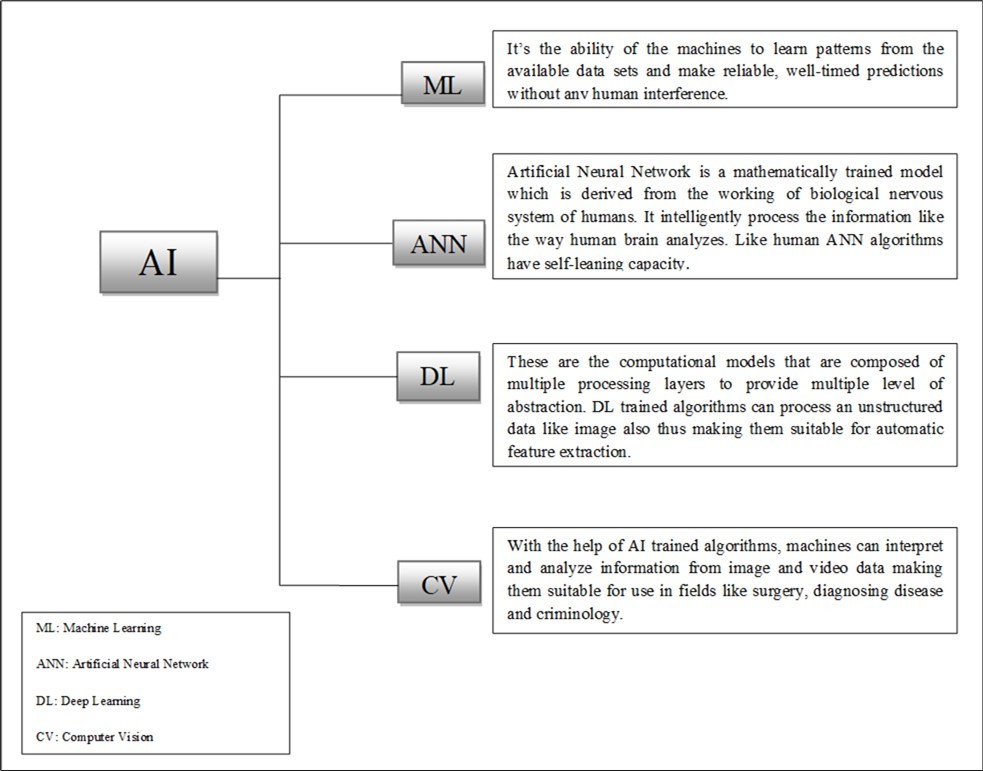
The realm of AI is not restricted to only the above discussion; today many research papers can be found on the concept of integrating AI with IoT (Internet of Things). An IoT based application and wearable sensors are used to collect a huge amount of related data and this data can be used for processing by AI algorithms or models to provide outcomes having practical value.
The incorporation of AI in medicine is not new. Around 1973 a time shared computer system was developed using AI algorithms and it was used by researchers for clinical and biomedical assistance. This was the first step of AI in medicine world; now we can see AI assisted robots doing knee surgery, AI assisted medical models selecting and grading an embryo for IVF treatment, AI assisted diagnosing of cancer tumours, genetic testing, biopsy procedures etc. The vicinity of medicine field is appreciably intensifying its research area with the help of medicine learning algorithm to help and cure mankind. AI algorithm based deep learning models are now considered as a technological ability of self learning (about disease on the basis of available medical data), diagnosing and predicting the treatment outcomes.
Common Reproductive Health Concerns for Women
NIH (National Institute of Environmental Health Sciences) states that female reproductive health points to the state of reproductive systems throughout all life phases. Reproductive disorders affect billions of women across the globe 1. The cause of female infertility can be directly linked to one of the following major reproductive issues:
1. Ovarian disease: Polycystic ovarian disease is associated with the abnormal menstrual cycle and Hyperandrogenism (excessive circulating male sex hormone in females). It is often associated with psychological impairments, including depression and other mood disorders 2. Clinical evidence supports the fact that the problem of PCOS is closely related to the infertility problem in females.
2. Endometriosis: Endometriosis is defined as a syndrome of reproductive-aged females described by the existence of endometrial tissue outside the uterine cavity and is normally linked with chronic pelvic pain and sterility. Patients often show symptoms such as intermenstrual bleeding, painful intercourse, painful defecation, painful periods, and painful urination 3.
3. Pelvic Inflammatory Disease: This ascending infection impinges on the uterus, Fallopian tubes, and ovaries. It is explained as an inflammation of the overlying genital area owing to an infection in females. Lasting intricacy include ectopic pregnancy, sterility, and constant pelvic pain 4.
4. Defective Implantation: The sources of implantation failure are miscellaneous and can be because of various maternal aspects such as uterine irregularities, hormonal or metabolic disarray, infections, physiological factors etc. 5.
Other reproductive issues can be blocking of tubes, deficient ovulation and many more which are mostly due to physical disorder like obesity, malnutrition and poor lifestyle.
Structure of Search Methodology
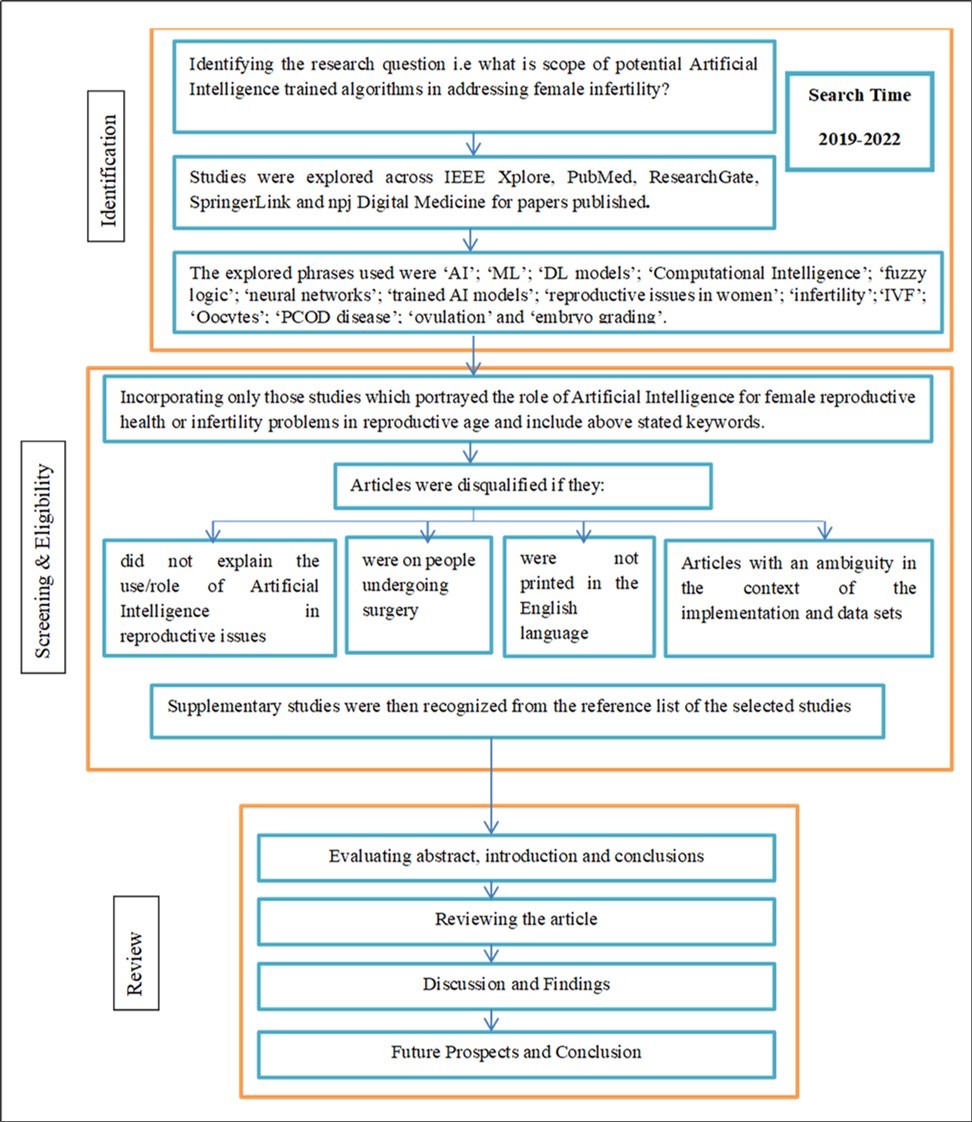
This literature review is structured in a 3-step framework:
Step 1: Identifying the research question
The research question was identified keeping in view the need of developing automated AI trained algorithms addressing the solutions to female infertility.
The research question is: What is the scope of potential Artificial Intelligence trained algorithms in addressing female infertility?
Step 2: Identifying relevant studies
Studies were explored across IEEE Xplore, PubMed, ResearchGate, SpringerLink and npj Digital Medicine for papers published. The explored phrases used were ‘AI’; ‘ML’; ‘DL models’; ‘Computational Intelligence’; ‘fuzzy logic’; ‘neural networks’; ‘trained AI models’; ‘reproductive issues in women’; ‘infertility’; ‘IVF’; ‘Oocytes’; ‘PCOD disease’; ‘ovulation’ and ‘embryo grading’. This review analyzes studies published between 2014 and 2021, focusing on the surfacing role of Medical Artificial Intelligence (MAI) in diagnosing and managing reproductive health disorders in women.
Step 3: Study selection
Following the database probing, identical articles were pulled out and the lasting titles and abstracts were inspected for suitability. Studies were incorporated if they portrayed the role of Artificial Intelligence for female reproductive health or infertility problems in reproductive age. Articles were disqualified if they: (1) did not explain the use/role of Artificial Intelligence; (2) were on people undergoing surgery; (3) were not printed in the English language, supplementary studies were then recognized from the reference list of the selected studies; (4) Articles with an ambiguity in the context of the implementation and data sets.
Flowchart of the same is as given below:
Literature Review
In the past few decades, AI, ML and DL have evolved in the medical field, and are creating numerous opportunities for innovation and development in female health care. Various AI solutions for reproductive issues in females have recently been modeled to cure infertility.
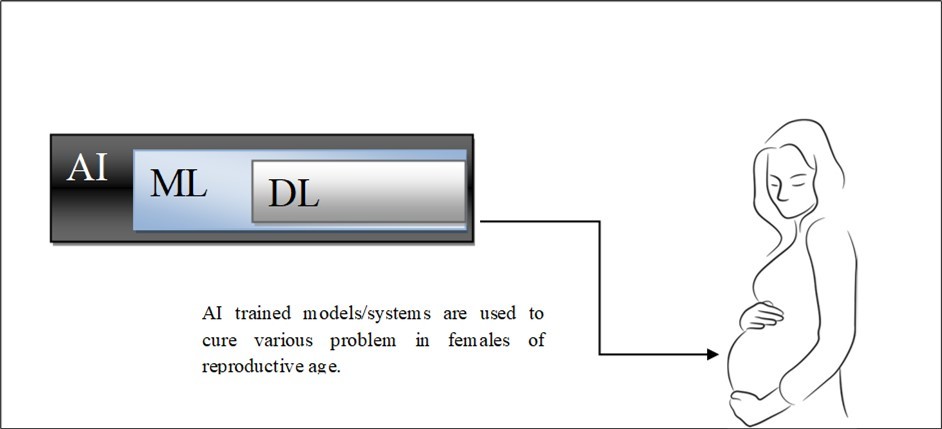
Following is the review summary of the study of AI, ML and DL trained medical models. The summary is divided into two broad categories only which relate to serious infertility issues in women and contribution of AI in them.
Various techniques AI approaches used for the prediction and analysis of PCOS
A methodology with image segmentation added between feature extraction and CNN was proposed by Palvi Soni et al. to eradicate unwanted data from an ultrasound image and to detect the disease with high precision. With a Convolutional Neural Network they tried to classify the ultrasound image to determine PCO class or nonPCO class. With the help of KNN (K-Nearest Neighbor Algorithm) classification was done for the severity of the disease whether the disease is mild, moderate or at a high level, according to which one can be treated for infertility. The proposed methodology is expected to detect PCOD disease in minimum execution time so as to save the time of doctors. 6
A system i-HOPE was proposed by Amsy Denny et al. for the timely discovery and prediction of PCOS. With the help of the unsupervised learning algorithm PCA (Principal Component Analysis) the redundant data set was eliminated and contributing significant features were selected. Classification of PCOS was done using various linear and nonlinear ML algorithms such as Naïve Bayes classifier method, K-Nearest neighbor (KNN), Random Forest Classifier (RFC), Classification and Regression Trees (CART) etc. The medical data sets required were acquired through a patient survey. Accuracy estimation of each of the algorithms was carried out and the achieved accuracy of the proposed model was RFC with an accuracy of 89.02%. 7
Dr.V.Krishnaveni outlined a four-step strategy for a prediction model to diagnose PCOS, which will assist the physicians to take early decisions for treatment on their patients. The paper suggests building a proposed prediction model by applying Computing Intelligence and data mining techniques. Two important processes were suggested in building a predictive model: (1) choosing the right criteria to solve the problem and (2) selecting the appropriate prediction method from the various Data mining techniques. The projected framework consists of collecting sample medical data set attributes related to PCOS from various related research papers, which might belong to five categories: Symptom, Medical history, Clinical signs, Scan findings and Blood test and Hormone analysis. After sample collection to eliminate redundant data feature selection is suggested to be applied on the medical data set, for which NP Hard and Heuristic algorithm approach is recommended. Then an appropriate data mining method is selected, for which some classification techniques and algorithms discussed are ID3 Algorithm, Naïve Bayes Algorithm, Artificial Neural Networks (ANN) Algorithm, K nearest neighbour algorithm etc. Finally for assessing the quality of the model both internal and external validating testing is suggested.8
Kiruthika and Ramya et al. proposed an automatic recognition method for a follicle. The method is an amalgamation of wavelet transform and k-means clustering. To quantify visual differences and to reduce computational complexity an RGB image is color transformed to L*a*b* Color space. Discrete wavelet transform decomposes the ultrasound image and it removes the high frequency elements in the image without degeneracy. The approximation coefficient which is obtained after wavelet transformation is taken as input to k-means clustering. For further highlighting the features and to get desired information from the cluster k-means algorithm is used. Further the Laplacian of Gaussian edge operator (LoG) is used to extract the region of interest and edges of the follicle. On the basis of the samples taken from the ultrasound images texture parameters along with intensity are suggested to be taken during clustering to reduce the classification error as the projected clustering algorithm was built on intensity alone due to which interfollicular regions were also observed as follicles.9
A technique for automatic discovery of follicles by quantifying the multiple features of an ultrasound image of an ovary was implemented with the help of a hybridized PSO (Particle Swarm Optimization) algorithm and ANN by O. R. Isah et al. The best features of the ultrasound image were selected by the PSO algorithm to improve the efficiency of the system, to lower MSE (Mean Square Error). The best features selected by the PSO algorithm decide the number of inputs necessary for training a specified framework of ANN. Using MLP (Multi-Layer Perceptron), a follicle detection algorithm which detects regions of interest and a hybridized PSO-MLP classification algorithm were developed. Classification rate and accuracy of the network were shown by a confusion matrix, which on the basis of the ability of the network to differentiate between follicles and non-follicles classes determines the high classification rate and accuracy. The algorithm was developed in Matlab R2015a and produced an accurateness of 98.3%.10
2. Various AI/ML techniques used in IVF clinic
Infertility in females of reproductive age has forced many desperate couples to opt for IVF, which is a medical modus operandi where an ovum of a female is fertilized by male gametes in a laboratory dish that is elsewhere outside the body of a female. Once an embryo reaches a multiple cell stage in about 5 days, an embryologist selects the embryo and loads it into a catheter so that a doctor can place it in the uterus for further development. Pregnancy takes place when this embryo attaches to and embeds itself into the uterus. Various AL and ML techniques can be incorporated in Assisted Reproductive Technology where sperm and an ovum are fertilized In vitro.
Gowramma G S et al. explained the method of medical IVF dataset visualization in graphical format to find out various relationships between the IVF dataset attributes and present them in a way which is easy for the physicians to perceive. To find the best relationships between the attributes they have used the concept of machine learning and python plotting libraries (Matplotlib and Seaborn) with the help of software named anaconda navigator. In Bar chart approach which is plotted for the embryos transferred attribute v/s no of the live birth count helped in showing the number of live birth occurrences. Similarly the Scatter Plot plotted for Year of Treatment Vs Total number of live births conceived with the help of IVF showed that the number of years of treatment increases the number of live births.11
I Tur-Kaspa et al. using an AI approach proposed a multilayer perceptron deep learning based oocyte yield prediction framework competent at predicting the count of female gametocyte yield for a given COS (controlled ovarian stimulation) protocol, which can be used by infertility specialists to enhance IVF success. The study was designed around a medical dataset which was collected between 2017-2021. This medical data set was additionally condensed to 769 cycles and was used as input for the AI framework. 12
Mikkel Fly Kragh et.al. presented a technical study on the evaluation and comparison of AI trained models for embryo selection. In order to evaluate and compare AI trained models two main performance metrics were discussed: Binary classification metrics and Model-wide metrics. Both Binary and Model-wide metrics were further categorized into a series of performance metrics: Sensitivity, Accuracy (Proportion of Correct Prediction), Specificity, PPV, NPV, AU to measure the performance of AI trained models. Clinical usefulness was also discussed to check how functional the model would be in clinical exercise. Randomized controlled trials were suggested to eliminate selection bias and for fair comparisons. 13
Jared Geller et.al. have presented a study to create and evaluate a convolutional neural network that can calculate live birth rates using static ultrasound images from an IVF process. For the rationale of the study they examined two classification problems, that is, calculating whether an embryo will lead to a successful pregnancy or not and predicting the result of that pregnancy. DL techniques, including data augmentation, were used to decrease model variance and to strengthen an inadequate medical dataset. A standard training and validation dataset split was used to shun model overfitting. A medical dataset was gathered from clinics in South Florida between 2016 and 2019. The main objective of the study was to develop an AI trained framework that takes in input day 5 moved blastocysts and which outputs a variable showing whether the image taken will finally lead to a live birth or not.14
Kevin Loewke et.al. collected data from various IVF clinics across the United States to introduce a generalized AI trained framework for grading embryos at the blastocyst phase. A series of Convolutional Neural Networks (CNN) were used to classify the cropped embryo ultrasound images. Comparison of results of the AI trained framework with manual morphology ranking is also done. The major performance metric employed for assessing the AI trained model is AuC (Area under Curve). The visualization technique and attribution algorithm illustrated that the AI framework was able to focus on significant features and sensitivity. 15
STORK, a fully automated framework formulated on Google’s Inception model developed by Pegah Khosravi et.al was used to categorize embryo images based on blastocyst ranking with the help of deep neural networks. The main objective was to remove the manual subjectivity of the grading process. An AI based DNN approach was utilized to decide on the highest quality embryos using a huge set of human embryo time-lapse images without preprocessing on the input images. STORK effectively calculated blastocyst quality with an AUC of >0.98. To train the system transfer learning was used and the best parameter set achieved from the ImageNet database was used to initialize the network parameter.16
Noritoshi Enatsu et. al. invented FiTTE, an AI based system which combined blastocyst images and clinical data to predict blastocyst viability. Two types of algorithms were used: DL algorithms for image inputs and ML algorithms for non-image inputs. The system also provided visual explanation via gradient-based localization. Gred-CAM technique (gradient-weighted class activation method) was used to produce a heat-map which provided physician to recognize areas of clinical value.17
Observations made from the literature review
Infertility is one of the most pressing dilemmas in females of reproductive age. The diagnosis of this problem criterion requires medical symptoms for the condition, including clinical and metabolic parameters. On the basis of the availability of a medical dataset multi-layer deep learning models are helping many physicians around the globe in curing infertility and counseling patients for better IVF treatments. There is a huge scope for further research in developing an AI trained system in IVF Labs from oocyte grading to embryo development tracking, and PCOD early diagnosing. With the introduction of an AI trained algorithm which possesses the capacity of doing recurring tasks with extraordinary reproducibility with a low error rate, Medical Artificial Intelligence (MAI) will surely bring a more planned, computed, and reliable approach to infertility problems in women.
A glimpse of literature review observation:
| Author & Year of Research | Methods Deployed | Objective of the study | Outcome |
| Soni, Palvi & Vashisht, Sheveta ,2019 6 | Image categorization by merging image segmentation along with CNN (Convolutional Neural Network) to achieve better accuracy | To exterminate unbalanced data and to sense the PCOS/PCOD with high precision. | Increased accuracy by eliminating redundant data in ultrasound images. |
| Amsy Denny et al., 2019 7 | Classification of PCOS was done by means of different ML techniques such as Naïve Bayes classifier method, CART, Random Forest Classifier, K-Nearest neighbor (KNN), logistic regression etc. | Detection and Calculation of PCOS using ML Techniques. | Achieved accuracy of RFC was 89.02 percent and it was found superior among other algorithms in performance. |
| V. Krishnaveni,2020 8 | Attempt to predict PCOS by integrating computer intelligence and data mining techniques together. | To develop a model for PCOS to assist the physicians for their final decision on their patients. | No clinical implementation and results are available. It was only a proposed prediction model |
| MM, Ramya & V., Kiruthika, 2014 9 | For automatic identification of follicles in ultrasound images k-means clustering, image fusion and edge based segmentation methods were used. | Automatic Segmentation in ultrasound Images for better detection of Ovarian Follicle. | The proposed algorithm helped the radiologist in making an accurate decision about the appearance of the follicle. |
| O. R. Isah et al., 2017 10 | Hybridized PSO (Particle Swarm Optimization) algorithm and ANN were used. | The aim of the study was to improve specificity, sensitivity and accuracy in automated systems for Polycystic Ovarian Syndrome (PCOS) | The algorithm produced an accuracy of 98.3%, 100% sensitivity and 96.8% specificity, which means that it was suitable for routine segmentation by medical experts. |
| Gowramma G S et al., 2021 11 | Machine learning and python plotting libraries with the help of software named anaconda navigator | To provide data visualization (i.e. graphical representation) for the IVF dataset to understand them in a better way. | Provided doctors with data visualization so as to visually identify the new patterns in an IVF cycle. |
| I Tur-Kaspa et al., 2022 12 | A trained Multilayer Perceptron Deep Learning Network. | To study whether an AI trained model can be developed in order to improve IVF success rate by deciding the optimal COS to maximize mature oocyte yield. | Based on different planned COS protocols an AI tool was constructed which was able to calculate mature oocyte yield. |
| Mikkel Fly Kragh et.al. ,2021 13 | Evaluation and comparison of automated AI trained models for embryo selection on the basis of two performance metrics: Binary classification metrics and Model-wide metrics. | To study and compare automated embryo evaluation and selection, with the AI assistance within IVF. | Provided a comparative view of an AI trained framework for embryo selection and ranking. |
| Jared Geller et.al., 2021 14 | Deep learning, including data augmentation and Transfer learning techniques. | To develop and evaluate a CNN to calculate embryo viability. | The study was able to achieve an appropriate classification precision for the feasibility of embryo by means of a static image. |
| Kevin Loewke et.al., 2021 15 | AI trained Convolutional Neural Network | To assess the advantage of the AI trained model for calculating clinical pregnancy | The study was able to highlight possible advantages of the AI trained framework in terms of enhanced calculations of clinical pregnancy |
| Pegah Khosravi et.al, 201916 | Deep Neural Networks | To develop an AI trained framework STROKE that can predict blastocyst quality for determining successful clinical pregnancy. | STROKE calculated the blastocyst quality with an AUC of >0.98 |
| Noritoshi Enatsu et. al., 2021 17 | DL algorithms for image inputs and ML algorithms for non-image inputs. | To develop and assess the (AI) trained system FiTTE for calculating blastocyst feasibility and visualizing the details by means of gradient-based localization | The study was able to provide more accurate prediction of the probability of clinical pregnancy. |
Limitations of the study
Almost all of the AI techniques discussed above are addressing two main problems regarding the infertility issue: addressing the problem and early diagnosis of PCOS in the women and enhancing the prediction accuracy of IVF treatment on the basis of images of blastocyst stage embryos. But most of the other significant facets which can be a cause of infertility like endometriosis, early detection of the blockage of fallopian tubes, defective implantation etc. have been neglected by the researchers. Also most of the research study is done specific to the areas in which they are developed, so it can yield different results with less accuracy and reliability on those who have different characteristics from other geographical areas. Like most of the research papers included in literature survey belong to Asia.
The grading assessment of an embryo in IVF is purely subjective, and also the complex structure of an embryo that is not possible for the human eye to capture can largely affect the embryo selection, thus putting a question mark on the successful outcome of IVF in the form of live births 18. With a manual grading system embryologists are not able to detect chromosomal abnormalities which can result in miscarriage or a lifetime genetic syndrome. Also the IVF end result can be multiple pregnancies, which has many risks associated with it like premature delivery and AI- Improved Embryo Selection can make a huge change in IVF positive outcome. With the ability of learning and recognizing complex desired patterns ML algorithms can help an embryologist in making a precise decision regarding grading the embryos and hence selecting the most feasible embryo for transfer. AI algorithms will not alter the standard IVF process; they will only enhance the probability of a single successful clinical pregnancy. Therefore more extensive simulation studies are needed to be done to generalize AI models.
Future research work
Today we are in that timeline of technology where we can say that a new dimension to wearable technology IoMT (Internet of Medical Things) is budding. So there is need to develop AI integrated IoMT for personalized reproductive gadgets. Despite the challenges, we can’t deny the fact that AI has a promising role in the female reproductive health. AI requires not only extensive simulation studies but also to explore some untouched areas of infertility like blockage of fallopian tubes, defective implantation, pelvic inflammatory disease (PID) etc. The aim of this review paper is to explore some application of AI in reproduction problems in females, but due to unavailability of research papers on other areas than PCOD and IVF, it only focuses on the discussion related to the contribution of AI modeled algorithms in these respective fields only. From the above discussion we can conclude that AI has proved to be an incomparable assistance tool in providing a specialist approach in the reproductive health issues in females.
This literature study is based on the objective to describe ways to develop a framework of wearable technology in the form of a sensor to predict the correct ovulation period. The following objectives should form the nucleus of the study:
1. To develop a framework of a wearable patch that can detect FSH, LH surge, basal body temperature in females.
2. To develop an algorithm that could identify the fertile window in real time.
3. To Test the effectiveness of the developed framework
References
- 2.Pasquali R, Stener-Victorin E, Yildiz B O, Duleba A J, Hoeger K et al. (2011) PCOS Forum: research in polycystic ovary syndrome today and tomorrow. Clin Endocrinol (Oxf). 74(4), 424-33.
- 3.Parasar P, Ozcan P, Terry K L. (2017) Endometriosis: Epidemiology, Diagnosis and Clinical Management. Curr Obstet Gynecol Rep 6(1), 34-41.
- 4.Jennings L K, Krywko D M. (2022) Pelvic Inflammatory Disease. [Updated. Available from:https://www.ncbi.nlm.nih.gov/books/NBK499959/
- 5.Timeva T, Shterev A, Kyurkchiev S. (2014) Recurrent implantation failure: the role of the endometrium. J Reprod Infertil 15(4), 173-83.
- 6.Soni Palvi, Vashisht Sheveta. (2019) Image Segmentation for detecting Polycystic Ovarian Disease using Deep Neural Networks. International Journal of Computer Sciences and Engineering 7, 10-26438.
- 7.Denny Amsy, Raj Anita, Ashok Ashi, Ram Maneesh, George Remya. (2019) i-HOPE: Detection And Prediction System For Polycystic Ovary Syndrome (PCOS) Using Machine Learning Techniques. 673-678.
- 8.Krishnaveni V. A Roadmap to a Clinical Prediction Model. , Ix, No. Ii, Pp, With Computational Intelligence for PCOS,” Vol, 177-185.
- 9.Ramya M M, Kiruthika V. (2014) Automatic Segmentation of Ovarian Follicle Using K-Means Clustering.
- 10.Omeiza Rabiu Isah, A D Usman, A M Tekanyi. (2017) A hybrid model of PSO algorithm and artificial neural network for automatic follicle classification.
- 11.G S. (2021) Visual Analytics System for Evaluating IVF Data Predicting Live Birth”. JRP 1, 50-63.
- 12.Tur-Kaspa D E Fordham, Perl O, Tur-Kaspa T, Rosentraub S, Rosentraub D et al. (2022) Artificial intelligence (AI) to optimize ovarian stimulation for IVF: from stimulation protocols to total and mature oocyte yield. D.P Cohen, P-618 Human Reproduction, Volume 37, Issue Supplement_1 deac107.568, https://doi.org/10.1093/humrep/deac107.568 .
- 13.M F Kragh, Karstoft H. Embryo selection with artificial intelligence: how to evaluate and compare methods?. J Assist Reprod Genet 38, 2021-10.
- 14.Geller J, Collazo I, Pai R, Hendon N, Lokeshwar S D et al. An artificial intelligence-based algorithm for predicting pregnancy success using static images captured by optical light microscopy during intracytoplasmic sperm injection. J Hum Reprod Sci 2021, 288-92.
- 15.Loewke K, Cho J H, Brumar C D, Maeder-York P, Barash O et al. (2022) Characterization of an artificial intelligence model for ranking static images of blastocyst stage embryos. , Epub, Fertil Steril 117(3), 528-535.
- 16.Khosravi P, Kazemi E, Zhan Q. (2019) Deep learning enables robust assessment and selection of human blastocysts after in vitro fertilization. npj Digit. Med 2, 21-10.