Journal of Enzymes

Submit Manuscript

Open Access Pub  ·  ISSN 2690-4829

Journal of Enzymes

A peer-reviewed journal for enzyme science: the discovery and characterization of enzymes, the structures and mechanisms behind catalysis, the ways activity is regulated, and the engineering and application of enzymes in laboratory, industrial and clinical settings.

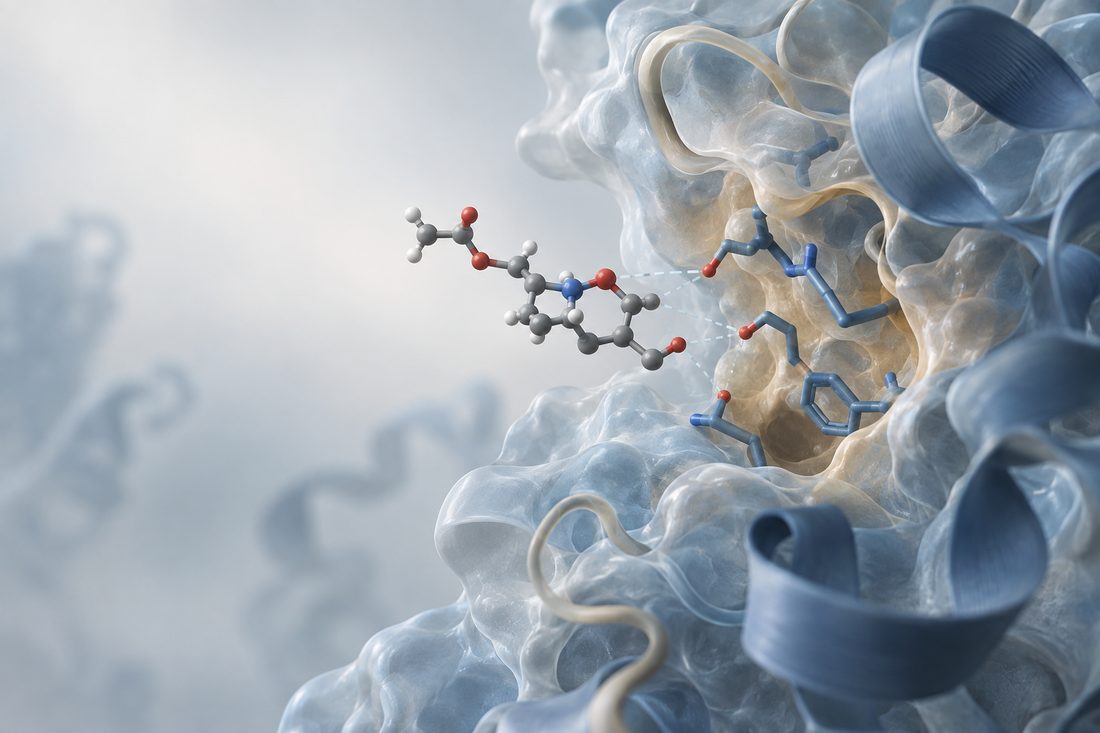
A substrate molecule approaching the binding pocket of an enzyme, with alpha-helices, side chains and hydrogen-bond contacts around the site.
A substrate approaching an enzyme active site.

The discipline

Fields the journal serves

Enzymes serves enzyme research as a whole. Organism, biological system and field of application vary; what holds constant is that the enzyme carries the scientific question.

  • Structure and function
  • Mechanism and kinetics
  • Catalysis and regulation
  • Pathway enzymology
  • Enzyme engineering and directed evolution
  • Biocatalysis
  • Clinical and diagnostic enzymology
  • Industrial and environmental applications

Emerging approaches are read on the same basis, wherever enzyme science remains central. The full remit is set out in Aims and Scope.

From the journal

Recent research

Three papers from Volume 1, Issue 3, spanning foundational enzymology, catalytic mechanism and applied biocatalysis. They are a selection from the journal's published record, and the remit reaches well beyond them.

Short Communication9 August 2025
Pages 34–47

REDOX ENZYMES: From Basics to Free Radical Scavenging

Andrés Concepción-Brindis, Mónica Elizabeth Martínez-González

Instituto Politécnico Nacional, Ciudad de México · Universidad Autónoma de Nayarit, Tepic

A short communication on the enzymes that move electrons between chemical species, and on the processes that depend on them — cellular respiration, photosynthesis, energy metabolism and the handling of free radicals. It begins from foundational definitions and works toward scavenging activity, drawing on familiar catalysts of cellular metabolism.

Research Article1 November 2024
Pages 13–33

Disruption of Hydrogen Bonding Network Decreases Catalytic Diversity of Chloroperoxidase via Abolishing Both Chlorination and Dismutation Activities

Elena Shersher, Armando D. Pardillo, Xiaotang Wang

Department of Chemistry and Biochemistry, Florida International University, Miami

Chloroperoxidase owes much of its catalytic range to a proximal alpha helix held perpendicular to the heme plane. The authors disrupted the hydrogen-bond pairs R26–N37 and A27–N33 by site-directed mutagenesis and followed the consequences by spectroscopy: the mutants showed altered tertiary structure and distinct heme coordination, and their activity profile changed across pH.

Research Article4 December 2023
Pages 1–12

Enzyme Immobilization on Polypropylene Film: A Role Model for Biocatalytic Polymer Membranes?

Patrizia Gartner, Jens Rudat, Maximilian Bilger, Tom Grünert, Gisela Lanza

Karlsruhe Institute of Technology, wbk Institute of Production Science · KIT, Institute of Process Engineering in Life Sciences 2

Enzymes are immobilized on polypropylene film as a first step toward a biohybrid approach to self-healing polymer electrolyte membranes. The study sets out the immobilization procedure and the analytical framework for assessing it, using a colorimetric p-nitrophenyl acetate assay, and examines the applicability and stability of the immobilized enzyme.

Editorial handling

How a manuscript is assessed

All submissions undergo initial editorial screening. Manuscripts that meet the journal's scope and minimum requirements proceed to independent peer review. Single-blind by default; double-blind review is available on request. Manuscripts that proceed to external peer review are normally evaluated by at least two independent subject-matter experts.

Editorial decisions are based on scope, scientific quality, methodological rigor, ethical compliance, reporting quality, and relevance to the journal. Decisions remain independent of fees, services, memberships, and editorial or reviewer roles.

Submissions

Submitting to the journal

Researchers whose work places an enzyme at the center of the question are invited to submit.

Authors must use only one submission route for the same manuscript.

Journal of Enzymes  ·  ISSN 2690-4829  ·  Open Access Pub

Articles are published open access under the Creative Commons Attribution License stated on each article.

Menu